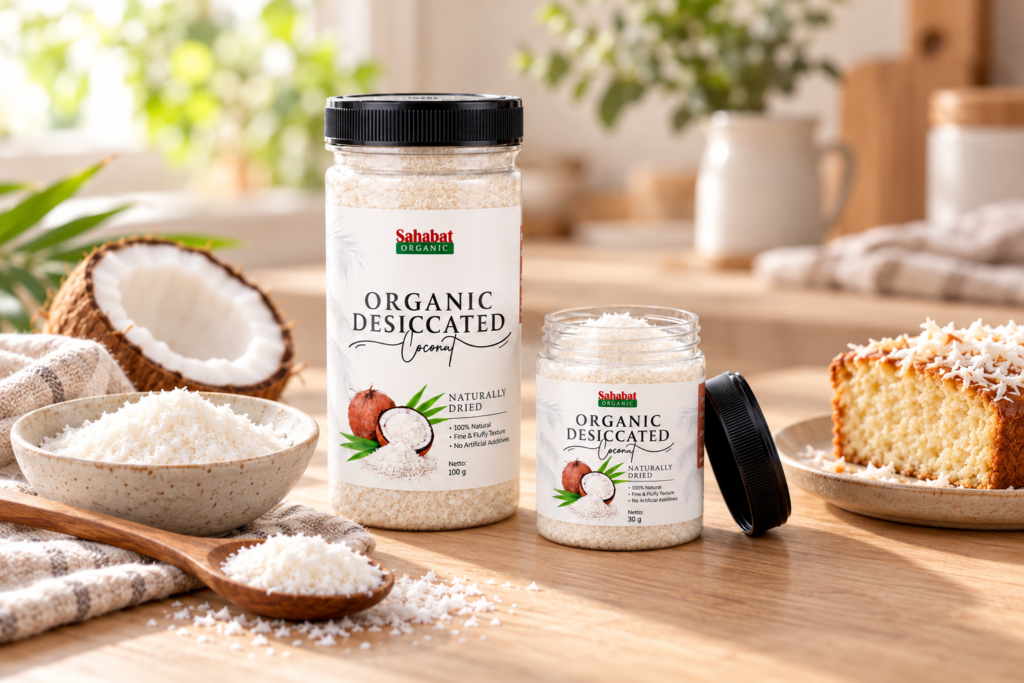
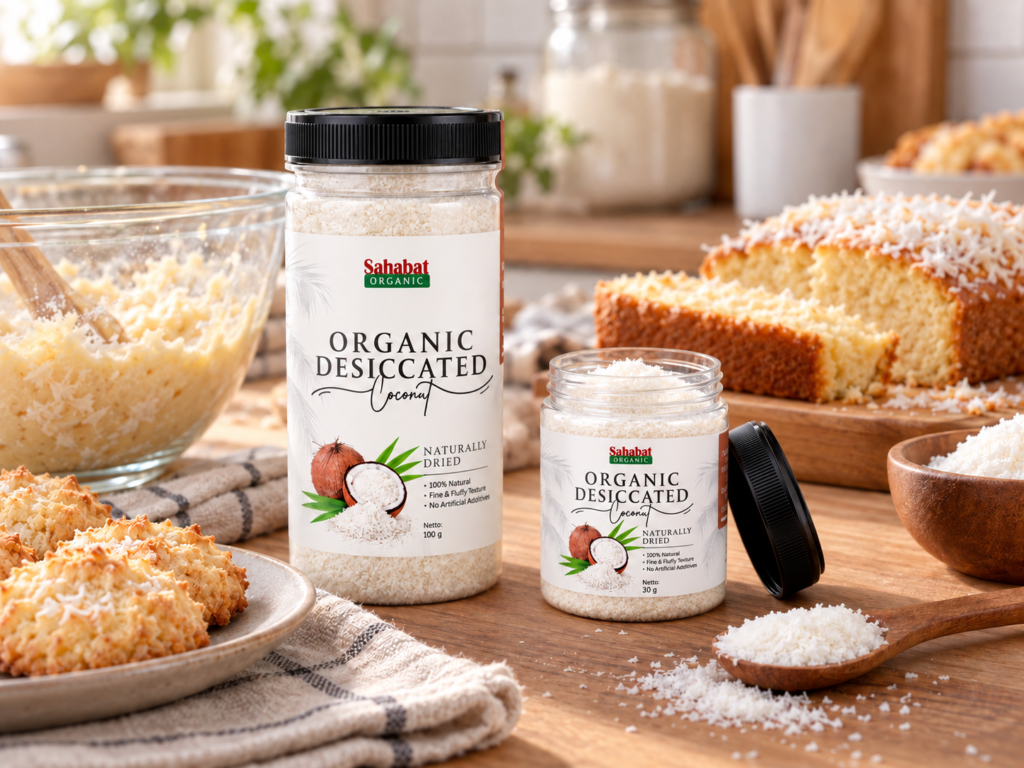
Desiccated coconut is coconut flesh that has been grated or cut into smaller pieces and dried to reduce its moisture content. In baking, it adds coconut flavor and texture to cookie dough, cakes, fillings, coatings, and toppings.
Before choosing a product, check the size of the pieces, whether it contains added sugar, and the instructions on the packaging. Similar-looking coconut products do not always behave the same way in a recipe.
Table of Contents
What Is Desiccated Coconut Made From?
Desiccated coconut is made from the white flesh of the coconut, the fruit of Cocos nucifera. Processing generally involves removing the shell, cleaning the flesh, reducing its size, drying it, and sorting it by particle size.
The Codex standard CXS 177-1991 covers several sizes, including extra-fine, fine, medium, and special cuts. Desiccated coconut therefore does not refer exclusively to a very fine, powder-like product. [1]
Drying and toasting are also different processes. Plain desiccated coconut is generally white to pale cream, while coconut browned through roasting or toasting is commonly called toasted coconut.
Desiccated Coconut vs. Fresh Coconut vs. Coconut Flour
These ingredients all come from coconut, but they serve different purposes in recipes.
| Ingredient | Main characteristics | Typical recipe uses |
|---|---|---|
| Desiccated coconut | Dried coconut in small particles or shreds | Cookies, cakes, fillings, and coatings |
| Fresh grated coconut | Retains much of its natural moisture | Dishes, fillings, and toppings that call for fresh coconut |
| Coconut flour | Finely milled flour with high liquid absorption | Batters and doughs formulated specifically for coconut flour |
| Coconut flakes | Larger, flatter pieces of coconut | Toppings and decorations with more visible coconut texture |
Desiccated coconut is not a direct substitute for coconut flour. King Arthur Baking explains that coconut flour absorbs substantial amounts of liquid and needs recipes formulated for its hydration requirements. Swapping the two without adjusting the recipe can change the result. [2]
The term shredded coconut usually describes thin strands, while flakes describes wider pieces. Product names vary between brands and markets, so check the appearance, ingredient list, and specifications rather than relying on the name alone.
How to Use Desiccated Coconut in Baking
Dried coconut works in a range of baked goods. For example, baking ingredient producer Bob’s Red Mill lists coconut macaroons, carrot cake muffins, and granola among the uses for its unsweetened shredded coconut. [3]
Cookies
Desiccated coconut adds coconut flavor and texture to cookies. Start with a recipe that specifically calls for dried coconut so the proportions of flour, fat, and liquid account for it.
If you are developing your own recipe, test a small batch first. Record the weight of coconut added and assess the texture once the cookies have cooled.
Cakes and Muffins
Dried coconut can be paired with ingredients such as chocolate, banana, or carrot in cakes and muffins. Smaller pieces are an option when you want a less noticeable coconut texture.
Follow the recipe’s mixing instructions. Adding extra coconut without adjusting the other ingredients can change the consistency of the batter and the texture of the finished bake.
Fillings and Dessert Coatings
Desiccated coconut can be used in coconut-based fillings or as a coating for chocolate balls and similar desserts. For a coating, choose pieces that adhere easily and create the finish you want.
A filling needs a different balance of moisture and binding ingredients from a dry topping. Use a recipe designed for the application you have in mind.
Cake Toppings and Granola
Use dried coconut as a finishing touch on desserts or as an ingredient in granola. For a toasted flavor, you can toast the coconut before adding it.
Work in small batches over low heat, stirring and watching closely. Remove it when it reaches the desired color, then let it cool before adding it to cream-based toppings or storing it.
How to Choose Desiccated Coconut for Baking
Check the following details before buying:
- Particle size. Match the size of the coconut to the texture you want in the batter, filling, or decoration.
- Ingredients. Check whether the product contains only coconut or includes other ingredients.
- Added sugar. If a recipe calls for unsweetened coconut, choose a product without added sweeteners.
- Packaging and date markings. Choose an intact package and check the best-before or expiry information.
- Usage and storage instructions. Follow the manufacturer’s guidance, including instructions for an opened package.
For a bakery business, keep a record of the brand and ingredient specifications that work for your recipes. Test a small batch when changing suppliers or particle sizes before switching your regular production.
Can You Substitute Desiccated Coconut for Fresh Grated Coconut?
Sometimes, but the results will not automatically be the same. Fresh coconut contributes more moisture, while dried coconut contains less.
A substitution may be easier to accommodate in a topping where texture is flexible. Cake batters and fillings with specific moisture requirements need more careful testing.
Do not assume a one-to-one substitution will work in every recipe. Follow any substitution instructions provided by the recipe author. Otherwise, choose a recipe developed for dried coconut.
Practical Tips for Baking with Desiccated Coconut
Weigh it according to the recipe. A cup of coconut can weigh different amounts depending on its form. King Arthur Baking’s ingredient weight chart, for example, lists different weights for unsweetened desiccated coconut and unsweetened shredded coconut. [4]
Check whether it is sweetened. Replacing unsweetened coconut with sweetened coconut can change both sweetness and the way the mixture behaves.
Do not soak it automatically. Some recipes use the coconut straight from the package. Add liquid or soak it only when the recipe requires it.
Distinguish between a mix-in and a topping. Coconut mixed into a batter should follow the recipe’s measurements. A finishing sprinkle can be adjusted to suit the portion and presentation.
How to Store Desiccated Coconut
Follow the storage instructions on the packaging. After opening, reseal the package securely or transfer the coconut to a clean, dry, airtight container. Keep it away from heat and moisture, and use a dry spoon when taking out a portion.
There is no single shelf life that applies to every product. Packaging, processing, and storage conditions vary.
Do not use coconut that shows mold or smells rancid. The Codex standard also requires desiccated coconut to be free from abnormal odors, including musty and rancid smells. [1]
Frequently Asked Questions
Is desiccated coconut the same as dried grated coconut?
Yes, dried grated coconut is a common description of desiccated coconut. The size and shape of the pieces can vary between products.
Is desiccated coconut the same as coconut flour?
No. Coconut flour has a different texture and absorbs liquid differently. Use the ingredient specified in your recipe.
Does desiccated coconut contain added sugar?
Check the ingredient list. Unsweetened products have no added sweeteners, while sweetened coconut contains added sweetening ingredients. No added sugar does not mean the coconut contains no naturally occurring sugar.
Should you soak desiccated coconut before baking?
Not always. If a recipe calls for dry coconut, use it as directed. Soaking introduces extra moisture that can affect the batter or dough.
Can you use desiccated coconut in traditional Indonesian cakes?
It can be considered for recipes adapted to use dried coconut. However, it will not necessarily recreate the texture of fresh grated coconut, especially in moist fillings and toppings.
Choose Dried Coconut to Suit Your Recipe
Desiccated coconut is a practical ingredient for exploring coconut cookies, cakes, fillings, and toppings. Start with the right particle size and ingredient composition, then follow a recipe designed for that type of coconut.
Explore more guides to coconut ingredients and their everyday uses at Sahabat Coconut Oil.
References
- Codex Alimentarius — CXS 177-1991, Standard for Desiccated Coconut (French-language PDF).
- King Arthur Baking — A Guide to Keto Baking, coconut flour section.
- Bob’s Red Mill — Shredded Coconut.
- King Arthur Baking — Ingredient Weight Chart.
Masak Lebih Sehat dengan Minyak Goreng Kelapa Sahabat
100% minyak kelapa murni untuk rumah tangga, usaha, dan industri. Belanja online atau hubungi tim kami.