Compare coconut sugar vs palm sugar: their ingredients, taste, and uses in drinks and baking. Learn how to choose the right sugar for your recipe.
The main difference between coconut sugar and Indonesian palm sugar, known as gula aren, is the plant from which the sap is collected. Coconut sugar is made from coconut blossom sap (Cocos nucifera), while gula aren comes from the sap of the sugar palm tree (Arenga pinnata). Both can be used as sweeteners, but their flavor, form, and moisture content should be considered when using them or substituting one for the other.
Source: perkebunan.brmp.pertanian.go.id
Table of Contents
- What Is Coconut Sugar?
- What Is Palm Sugar?
- Differences in Taste and Aroma
- Can You Tell Them Apart by Color?
- Which Is Suitable for Coffee and Other Drinks?
- Which Is Suitable for Baking?
- Can Coconut Sugar Replace Palm Sugar?
- Is Coconut Sugar Healthier than Palm Sugar?
- How to Choose for Your Kitchen or Business
- Frequently Asked Questions
- Discover Coconut Sugar for Your Creations
What Is Coconut Sugar?
Coconut sugar is made from coconut blossom sap. It is not made from coconut flesh, coconut milk, or the coconut water found inside the fruit.
The sap is collected and then heated to reduce its water content and concentrate the sugars. Further processing determines whether the sugar is formed into blocks or granules. Producing granulated sugar involves different finishing steps from those used to make molded sugar.
Source: perkebunan.brmp.pertanian.go.id
The Indonesian term gula semut refers to sugar in granular form, rather than the plant it comes from. It can therefore be made from either coconut sap or sugar palm sap.
Source: pustaka.bppsdmp.pertanian.go.id
What Is Palm Sugar?
Gula aren is a sweetener made from the sap of the sugar palm tree. The sap can be processed into molded sugar, granulated sugar, or liquid sugar. Palm sugar therefore does not always come in blocks or semicircular shapes.
Source: repository.pertanian.go.id
When purchasing it, check the ingredient list to identify the raw material and whether the product contains a blend. Shape and color alone are not enough to determine the type of sugar used.
| Aspect | Coconut Sugar | Palm Sugar (Gula Aren) |
|---|---|---|
| Raw material | Coconut blossom sap | Sugar palm sap |
| Plant of origin | Cocos nucifera | Arenga pinnata |
| Product forms | Includes molded and granulated sugar | Includes molded, granulated, and liquid sugar |
| Flavor characteristics | May have caramel, butterscotch, or brown sugar notes | Has a distinctive palm sugar aroma; its intensity depends on the product and processing |
| Suggested uses | Coffee, cookies, granola, and cooking seasonings | Coffee with milk, kolak, traditional cakes, and sauces |
| Recipe considerations | Match the form and granule size to the mixing method | Molded sugar may need to be shaved or chopped; syrup requires adjustments to the liquid content |
The flavor descriptions in this table are general guidelines. Both sugars can be used in many of the same recipes; the suggested uses are not strict categories. [1][3][4][5]
Coconut Sugar vs Palm Sugar: Differences in Taste and Aroma
Coconut sugar is often described as having caramel, butterscotch, or brown sugar notes. King Arthur Baking describes its butterscotch and brown sugar characteristics in its sweetener guide. The word “coconut” in its name does not mean it necessarily tastes like coconut milk. [4]
Palm sugar has a distinctive aroma that can be an important part of a dish’s character. Research on sugar palm sap processing also discusses how filtration affects volatile compounds—the components associated with aroma. [5]
However, it would be inaccurate to conclude that all palm sugar has a stronger flavor or that all coconut sugar has a milder flavor. Raw materials and processing methods can produce different characteristics.
For business use, test samples in the same recipe. A sugar’s flavor when tasted on its own may not be equally noticeable once mixed with coffee, milk, chocolate, or spices.
Can You Tell Them Apart by Color?
Brown color alone is not enough to determine whether a product is coconut sugar or gula aren. Both belong to the broader category of palm-derived sugars, and processing can affect their appearance. Research on liquid sugar palm products, for example, examines how processing temperature affects color. [2][6]
Use the ingredient name and ingredient list as your reference. The term “palm sugar” also requires closer attention because the palm family includes coconut palms, sugar palms, and other plants. [1]
Which Is Suitable for Coffee and Other Drinks?
Both can be tried as drink sweeteners. Choose based on the flavor profile you want to highlight, then compare them using measured amounts.
Here are some ideas:
- Coconut sugar: Coffee with milk, hot chocolate, or spiced tea with caramel notes.
- Palm sugar: Indonesian palm sugar coffee with milk, ginger drinks, or traditional beverages that feature its distinctive aroma.
For a simple taste test, prepare two cups of a drink using the same ingredients and volume. Add the same weight of sugar to each, then compare sweetness, aroma, and aftertaste. This is a practical testing method, not proof that both sugars have identical sweetness.
For cold drinks, dissolve the sugar first in a small amount of warm liquid included in the recipe to help it mix more easily.
Which Is Suitable for Baking?
Coconut sugar and palm sugar can both be suitable when a recipe calls for their distinctive flavor and color. Coconut sugar is used in baking recipes, including cookies and cakes. However, changing the type of sugar can affect the results. [4][7]
When baking, consider:
- Sugar form: Granulated sugar, molded sugar, and syrup cannot always be used in the same way.
- Granule size: Choose a size that suits the recipe’s mixing method.
- Moisture content: Replacing dry sugar with syrup also changes the amount of liquid in the batter or dough.
- Desired results: Evaluate the color, texture, and aroma after baking.
For recipe development, start with a recipe that already uses coconut sugar or palm sugar. If you want to experiment, make a small batch before changing a production recipe.
Can Coconut Sugar Replace Palm Sugar?
You can try substituting it in many dishes and drinks, but the flavor will not always be the same. Gradual adjustments are easier in seasonings or drinks than in baking recipes that are sensitive to ingredient proportions.
As a starting point for kitchen testing, if both products are dry sugars without added ingredients, compare them at the same weight. For example, test 20 grams of coconut sugar against 20 grams of palm sugar in two small portions of the same recipe. This is not a universal substitution ratio that guarantees identical results.
Do not assume that 20 grams of dry sugar is equivalent to 20 grams of sugar syrup. Syrup contains water, so its sugar content and effect on the recipe are different.
Is Coconut Sugar Healthier than Palm Sugar?
The ingredient name and color are not enough to conclude that one is always healthier than the other. Both contribute sugar when added to food or drinks.
WHO classifies sugars added by manufacturers, cooks, or consumers as free sugars, whose intake should be limited. Switching sweeteners does not automatically reduce the amount of sugar consumed. [8]
This article does not assign a universal glycemic index value to either sugar or claim that either can be consumed without restriction by people with diabetes. To compare products, check their nutrition information and serving sizes.
How to Choose for Your Kitchen or Business
Use these four considerations:
- Raw material: Make sure the product contains coconut sugar, palm sugar, or a blend that meets your needs.
- Form: Choose granulated, molded, or liquid sugar based on the recipe and how you measure ingredients.
- Consistency: For business use, record the weight per serving and taste-test results whenever you change products.
- Handling: Follow the storage instructions on the label, use clean and dry utensils, and close the packaging after use.
For coffee shops and bakeries, keep records of the brand or supplier, batch number, quantities used, and test results. This makes it easier to trace flavor changes when ingredients change.
Frequently Asked Questions
Is coconut sugar the same as palm sugar?
No. Coconut sugar comes from coconut sap, while gula aren comes from sugar palm sap. [1]
Is coconut sugar made from coconut water?
No. It is made from sap tapped from coconut blossoms, not the water inside the coconut fruit. [1]
Is gula semut always coconut sugar?
No. Gula semut refers to granulated sugar and can be made from either coconut sap or sugar palm sap. [2][3]
Is palm sugar always darker than coconut sugar?
This is not a reliable rule. Processing affects color, so the ingredient list is a better way to identify the product. [6]
Can coconut sugar be used in coffee with milk?
Yes, it can be tried as a sweetener. Adjust the amount to suit your recipe and desired flavor profile.
Discover Coconut Sugar for Your Creations
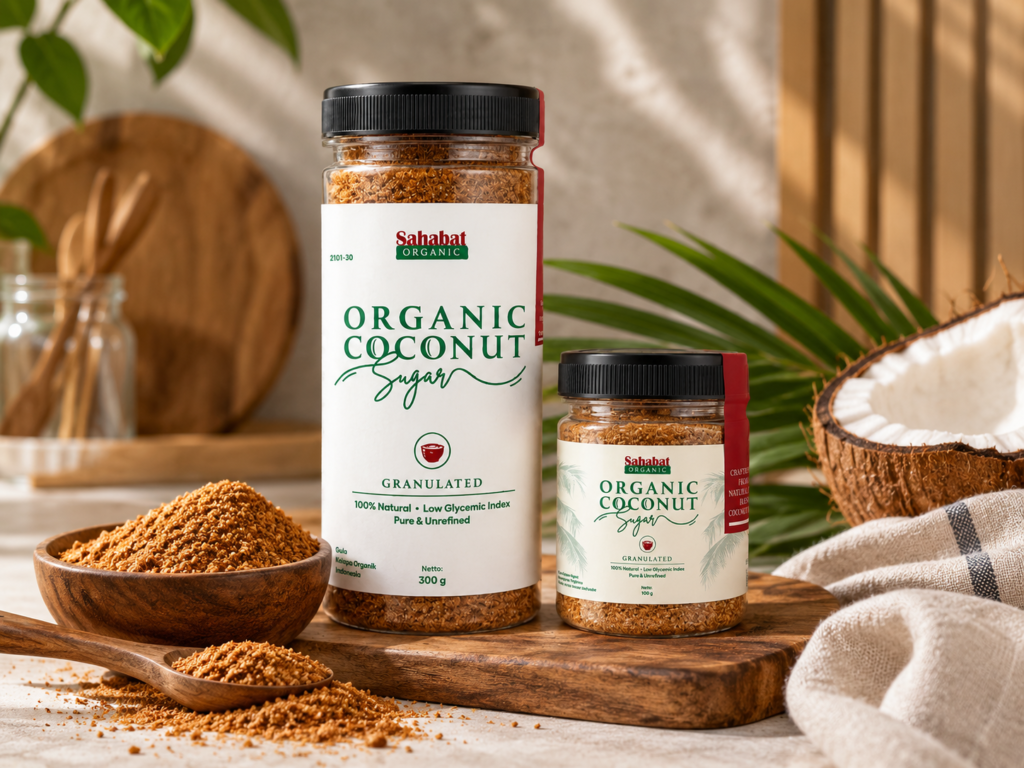
Want to try coconut sugar in drinks, baking, or cooking? Explore Sahabat Coconut Oil’s product selection and check the product information to find an option that suits your kitchen’s needs.
Visit Sahabat Coconut Oil.
Masak Lebih Sehat dengan Minyak Goreng Kelapa Sahabat
100% minyak kelapa murni untuk rumah tangga, usaha, dan industri. Belanja online atau hubungi tim kami.