Here’s how to measure coconut oil for baking. If your recipe calls for “¼ cup melted coconut oil,” melt the oil first, then measure ¼ cup. If it calls for “¼ cup coconut oil, melted,” measure ¼ cup first, then melt that portion. If the recipe gives a weight in grams, you can weigh the oil in either state.
This distinction comes in handy when you open a bottle of virgin coconut oil (VCO) to make muffins. Some mornings the oil pours easily. On cooler mornings, it may be firm enough to hold the shape of a spoon. Here’s how to measure coconut oil in either case.
Table of Contents
How to Read Coconut Oil Measurements in a Recipe
Look at where the word melted appears in the ingredient list. When it comes before coconut oil, it describes what goes into the measuring cup. When it follows a comma, it usually describes what to do with the portion you’ve just measured. Read the mixing instructions as well, especially if the ingredient list simply says coconut oil.
| If the recipe says | What to do |
|---|---|
| ¼ cup melted coconut oil | Melt enough oil to pour, then measure ¼ cup. |
| ¼ cup coconut oil, melted | Fill and level a ¼-cup measure, then melt that portion. |
| 50 g coconut oil, melted | Weigh 50 g, then make sure it is liquid before mixing. |
| 50 g softened coconut oil | Weigh 50 g and use it when it is soft enough to press with a spoon. |
You can see both wordings in published muffin recipes. Cookie and Kate’s Maple-Sweetened Banana Muffins calls for melted coconut oil, while its Banana Coconut Muffins lists virgin coconut oil with melted after the comma. Both use liquid oil in the batter. The wording tells you when to reach for the measuring cup. Cookie and Kate
How to Measure Coconut Oil When It Is Solid
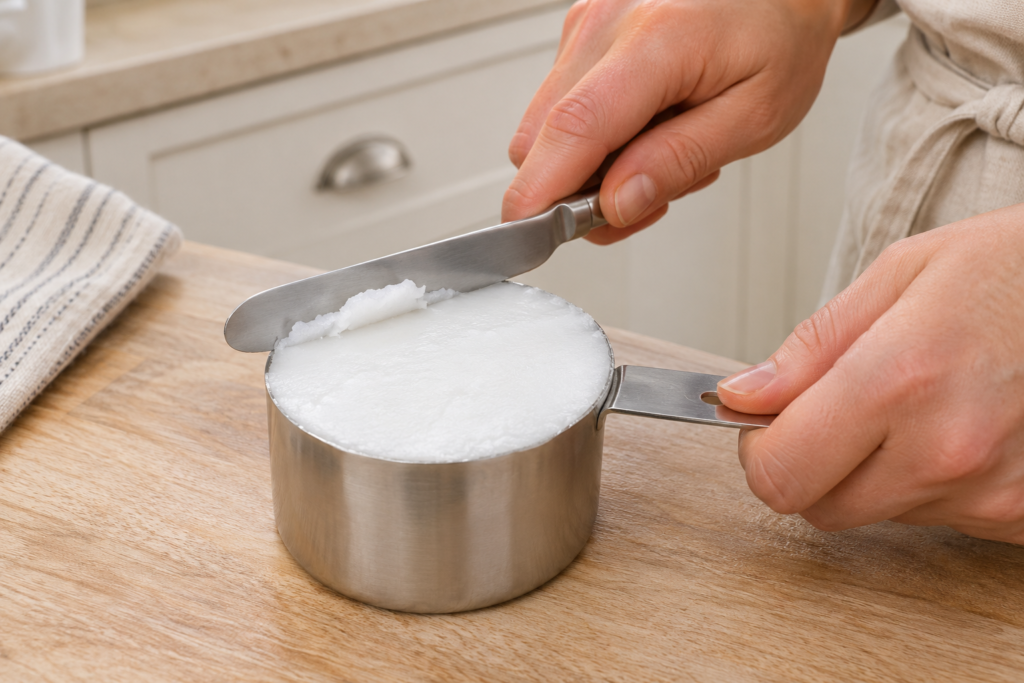
For a recipe that asks you to measure by volume before melting, use a dry measuring cup with a flat rim. Spoon the solid oil into the cup in small pieces. Press each spoonful against the side with the back of the spoon, filling any gaps. Once the cup is full, draw a straight edge across the rim.
The gaps are easy to miss. Two large curls of coconut oil can reach the top of a ¼-cup measure while leaving an empty pocket underneath. Pressing the oil into the corners gives you a more consistent portion. Scrape the measured oil into a heatproof bowl and melt it gently if the recipe calls for that step.
How to Measure Melted Coconut Oil
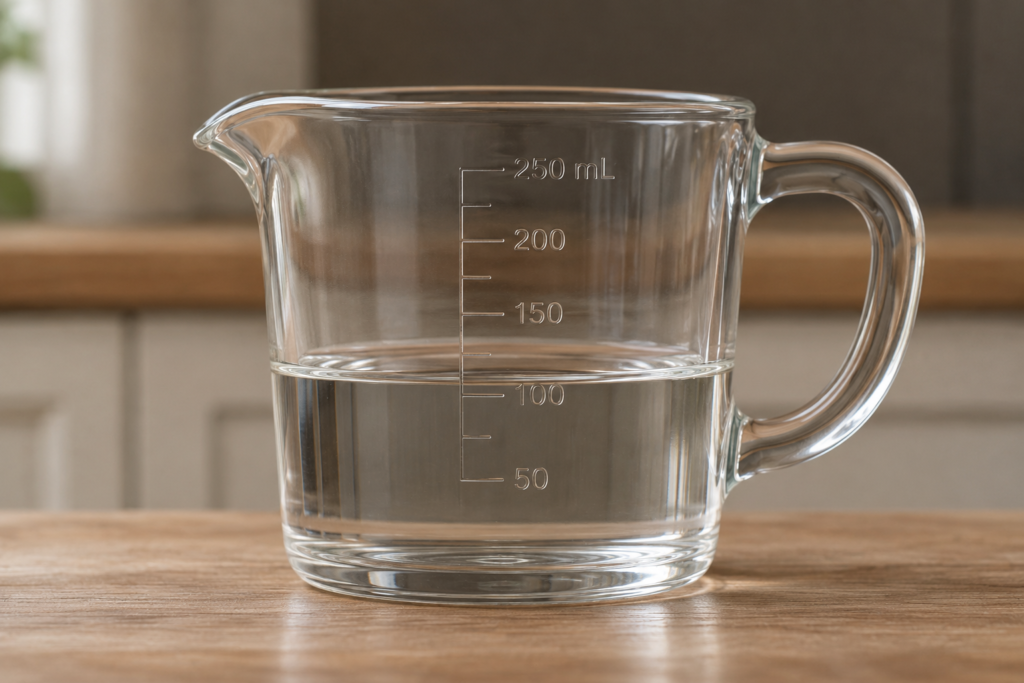
If the oil already flows freely from the bottle, you can measure it straight away. If it is firm, transfer a portion to a dry, heatproof bowl and warm it gently until the last white piece melts.
Set a liquid measuring cup on a level counter. Pour slowly, then lower your eyes to the height of the measurement line. A small measuring cup with a clearly marked ¼-cup or 60 ml line is easier to read for a muffin recipe than a large jug with widely spaced markings. Use the unit printed in your recipe. King Arthur Baking also recommends reading liquid measurements at eye level. King Arthur Baking
For one or two tablespoons, use a measuring spoon. Hold it level over a separate bowl as you fill it. That way, an extra splash stays out of the batter.
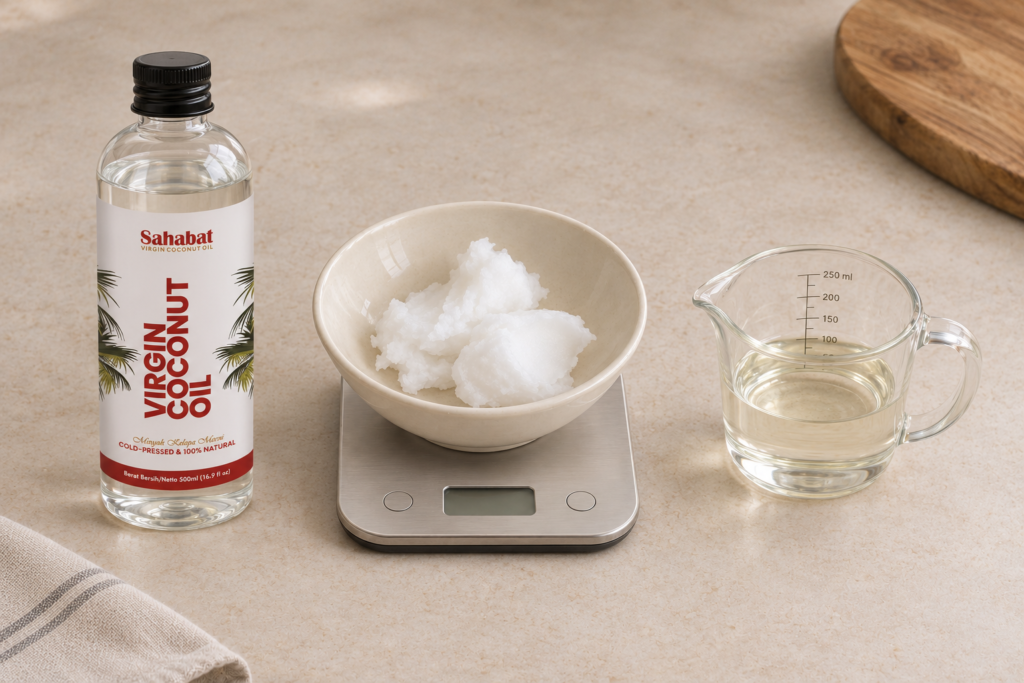
If the Recipe Gives Grams, Use a Kitchen Scale
Place a dry bowl on the scale and press tare to set the display to zero. Add coconut oil until you reach the weight in the recipe. A 50 g portion of solid coconut oil still weighs 50 g after it melts, provided all the oil stays in the bowl.
A scale is particularly handy if you bake the same recipe at home and later make a larger batch for a café. If one batch calls for 50 g, a double batch needs 100 g. Write that weight alongside the recipe so the next person can repeat it, whether the oil is pourable or firm that day.
A Muffin Example from Bottle to Mixing Bowl
Suppose you are making banana muffins and the ingredient list calls for ⅓ cup melted coconut oil. Before mashing the bananas, check the bottle. If the oil is solid, gently melt a portion in a separate bowl. Once it flows, measure ⅓ cup and add it at the step specified in the recipe.
Also check whether the recipe asks for room-temperature eggs or milk. Cold ingredients can cause some of the melted coconut oil to firm up again, leaving small white flecks in the wet mixture. Preparing the ingredients in the order the recipe gives can save you from having to stop halfway through mixing. Cookie and Kate’s banana muffin recipe, for example, specifies melted oil and preferably room-temperature eggs. Cookie and Kate
Frequently Asked Questions
Do I need to melt the whole bottle of virgin coconut oil?
You only need enough liquid oil for the recipe. If the oil is already pourable, measure directly from the bottle. If you can scoop it from the container, transfer the portion you need to a separate bowl for melting.
Can I use the same number for grams and milliliters?
Grams measure weight, while milliliters measure volume. If a recipe specifies 50 g, use the scale. If it specifies 50 ml, use a marked measuring cup. When the author gives both, choose whichever matches your equipment.
What if my recipe just says “coconut oil”?
Read the next step. An instruction to drizzle the oil into a mixture calls for pourable oil. An instruction to rub it into flour calls for oil firm enough to work in with your fingertips. The verb often tells you more than the ingredient list alone.
Choosing Virgin Coconut Oil for Your Kitchen
If you’re trying VCO in a muffin recipe for the first time, start with one batch and note the amount you use. That gives you a practical basis for choosing a bottle size, especially if you plan to bake the recipe regularly. For more about the ingredient itself, read Sahabat’s introduction to virgin coconut oil.
Looking for a bottle for your home kitchen or a sample for a bakery trial? Ask Sahabat about VCO sizes on WhatsApp.
Masak Lebih Sehat dengan Minyak Goreng Kelapa Sahabat
100% minyak kelapa murni untuk rumah tangga, usaha, dan industri. Belanja online atau hubungi tim kami.