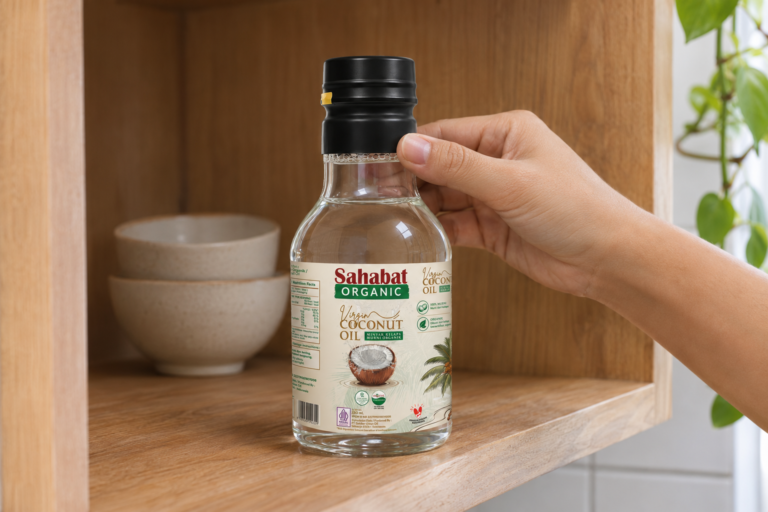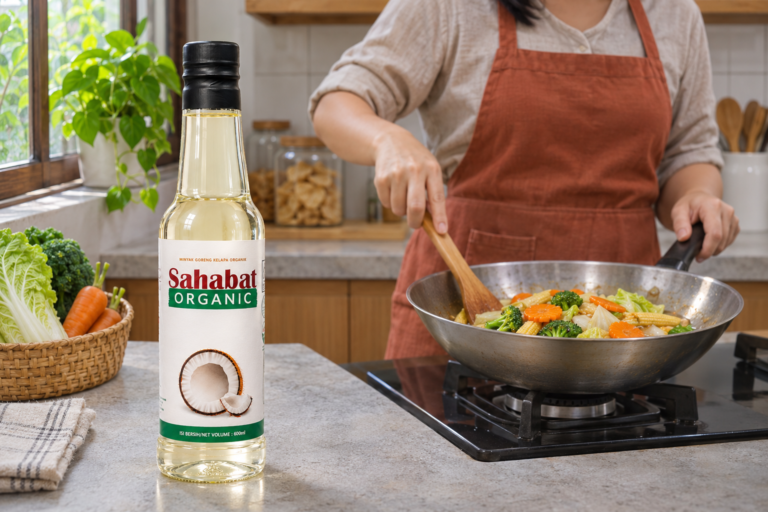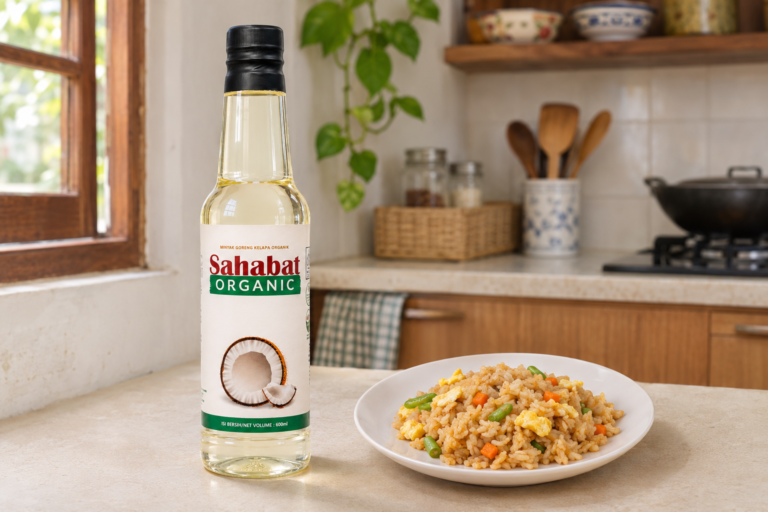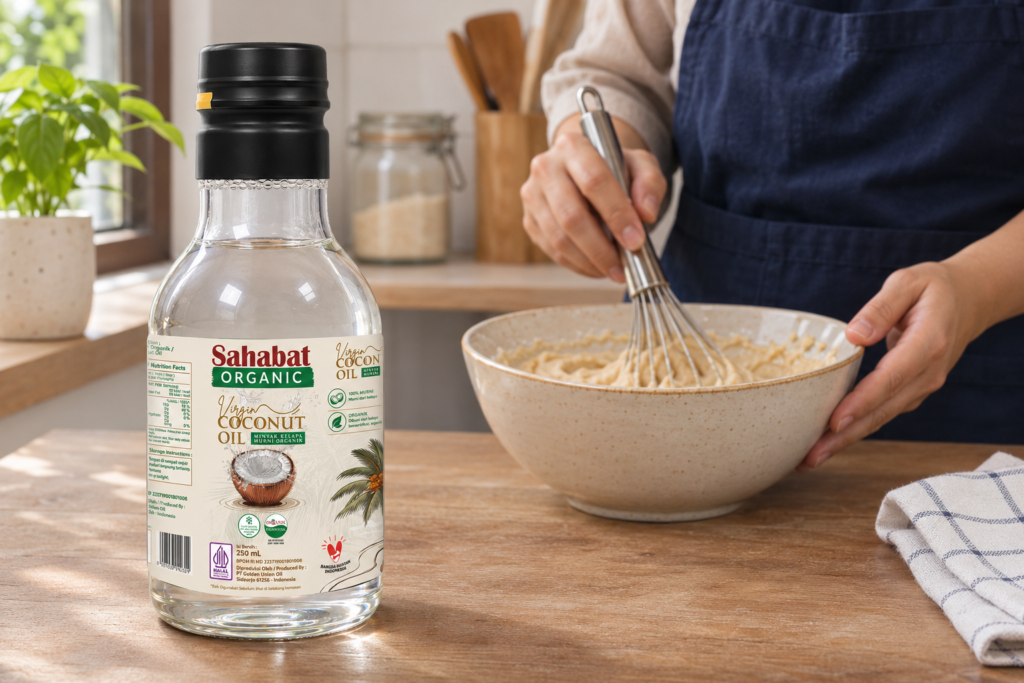
A little coconut aroma can bring a different character to a familiar dish. In banana muffins, coconut rice, or a freshly prepared sambal, the oil you choose becomes part of the flavor.
Organic virgin coconut oil combines virgin coconut oil’s characteristic coconut aroma with production and handling requirements under an applicable organic standard. For someone choosing ingredients for home cooking, it offers both a culinary preference and a way to consider how an ingredient was produced.
Understanding the label helps you select a bottle that fits your recipes. Here is what organic VCO means, where its practical benefits lie, and how to introduce it into your kitchen.
Table of Contents
What is organic virgin coconut oil?
Virgin coconut oil, commonly abbreviated as VCO, is obtained from fresh coconut meat through processes that separate the oil. Production methods vary, and the resulting oil generally retains a recognizable coconut flavor and aroma. The Nutrition Source
The word organic adds information about production and handling. Under the USDA system, for example, organic certification verifies compliance with requirements governing farming and handling operations. The certification information associated with a product identifies the standard that applies. Agricultural Marketing Service
When choosing a bottle, read these descriptions together. They help answer questions about both the ingredient’s production and its intended use.
| Label term | What it helps you understand |
|---|---|
| Organic | The farming and handling standard associated with the product |
| Virgin coconut oil | The type of coconut oil and its processing category |
| Cold pressed | Additional information about the extraction method |
| Net volume | How much oil the package contains |
| Directions for use | How the manufacturer recommends using the product |
For more background on VCO production and terminology, read Sahabat’s introduction.
Explore what virgin coconut oil is and how it is used
What are the benefits of choosing organic virgin coconut oil?
Natural coconut character in your recipes
VCO’s coconut aroma gives you another way to develop flavor in food. It can suit recipes that already include coconut, banana, or warm spices, as well as savory dishes where you enjoy a coconut note.
Start with a recipe that specifically calls for coconut oil. This makes it easier to judge the flavor while following an established ingredient balance.
The intensity of the aroma can vary between products. Taste a small batch before deciding how the oil fits your regular cooking.
An ingredient choice that reflects your shopping preferences
If you already choose organic rice, vegetables, or spices, organic virgin coconut oil allows you to apply that preference to another part of your meals.
USDA organic standards, for example, address soil fertility, pest management, and permitted inputs. Handling requirements also include measures to prevent organic products from mixing with conventional products and contacting prohibited substances. These provisions give shoppers a defined production framework to consider. ams.usda.gov
Check the standard and certification associated with the specific bottle when this is important to your purchase.
A plant-derived fat with useful texture characteristics
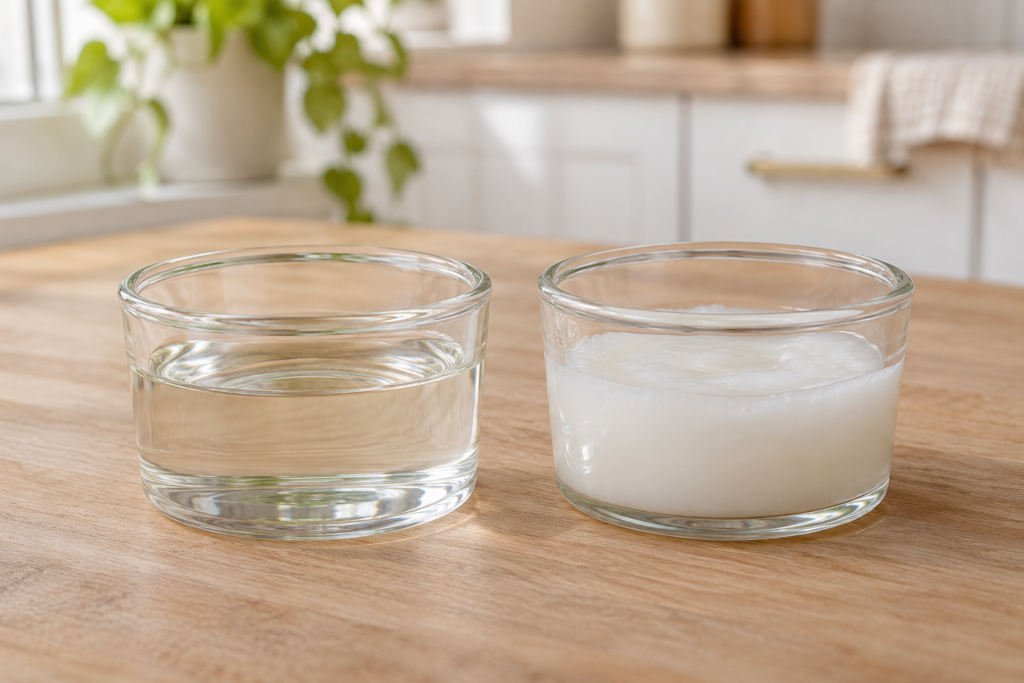
Coconut oil changes consistency with temperature. It can be liquid in a warm kitchen and firm or semi-solid in cooler conditions. This affects how it pours, measures, and combines with other ingredients. The Nutrition Source
In baking, follow the recipe’s instruction for liquid, softened, or solid oil. Preparing the correct consistency before mixing helps you follow the intended method more closely.
Three ways to use organic virgin coconut oil
1. Add coconut character to banana muffins
Choose a banana muffin recipe developed with coconut oil. Banana and coconut make a useful starting combination for exploring VCO’s flavor.
Measure the oil in the state specified by the recipe. If it calls for melted oil, prepare it before combining the wet ingredients. Follow the recipe’s temperature guidance for eggs and milk as well.
For your first batch, keep the remaining ingredients and quantities consistent. After baking, assess the aroma, crumb, and overall flavor before making further adjustments.
This is also useful for a small bakery. A documented trial makes it easier to repeat a result that customers enjoy.
2. Try a small batch of sambal matah
Sambal matah offers a savory setting in which to explore coconut aroma alongside shallots, chili, and lemongrass.
Use a trusted recipe that allows coconut oil and follow its preparation method. Begin with a small batch so you can judge how the oil works with the aromatics and the food served alongside it.
Measure the recipe’s oil quantity before starting. Taste the finished sambal with rice, tofu, or another part of the meal to assess the complete combination.
3. Use it in a coconut rice recipe
A rice recipe that includes coconut oil provides another straightforward introduction to organic VCO.
Select a recipe with clear quantities for the rice, cooking liquid, and oil. Follow those proportions and allow the coconut aroma to become part of the finished dish.
Pair the rice with vegetables and your preferred protein. For the first trial, choose familiar side dishes so you can more easily notice the change in the rice.
Can you cook with organic VCO?
For a VCO product labeled for food use, follow the manufacturer’s cooking directions and choose a suitable recipe. The processing description, intended application, and cooking method all deserve attention.
Consider whether you want coconut aroma in the dish. That preference can help you decide between virgin coconut oil and other coconut cooking oil options.
For dishes where you are comparing processing types, Sahabat’s RBD guide explains the terminology behind refined coconut oil.
Read about RBD coconut oil and its differences from VCO
How should you understand the health claims?
Organic virgin coconut oil is a concentrated source of fat, with a high proportion of saturated fat. Evaluating its place in your meals therefore involves both the amount used and your overall dietary pattern. The Nutrition Source
WHO recommends limiting saturated fat and choosing unsaturated fats as replacements where appropriate. Oils such as olive, canola, and soybean oil are examples of sources of unsaturated fat. who.int
For home cooking, measure VCO and use it where you enjoy its culinary qualities. Build meals around a variety of vegetables, pulses, grains, and suitable protein sources.
Claims about weight loss, cholesterol, or immunity require evidence specific to the product and the outcome being claimed. Organic certification provides information about production and handling practices.
Choosing VCO from Sahabat
Sahabat’s website lists cold-pressed VCO in 100 ml spray, 250 ml, and 500 ml formats. These sizes give shoppers options to consider according to their intended use and frequency of cooking. Minyak Goreng Kelapa Sahabat
When selecting an organic variant, review the exact product listing and packaging for the organic designation and applicable certification information.
Before ordering, consider the following.
- Your intended recipe. Decide where you want the coconut aroma to contribute.
- The product description. Check the VCO designation, processing information, and directions.
- The package size. Choose a volume that fits how often you expect to use it.
- The organic information. Confirm the certification covering the item if organic sourcing is part of your requirement.
For cafés and bakeries, record the exact product and size used in a successful trial. This provides a clear reference for future purchases.
Make room for coconut flavor in your next recipe
A familiar recipe is a good place to begin. Choose banana muffins, sambal matah, or coconut rice, then measure the oil and follow the recipe carefully.
Explore Sahabat’s VCO range and ask the team about the organic variant, available sizes, and product information that matches your needs.
Find your next bottle of VCO through Sahabat’s store.
Explore Sahabat Coconut Oil on Shopee
Frequently asked questions
What does organic VCO mean?
Organic VCO means organic virgin coconut oil. The organic designation concerns the applicable production and handling standard, while VCO identifies the type of coconut oil.
Does organic virgin coconut oil taste like coconut?
Virgin coconut oil generally retains coconut flavor and aroma. The intensity can vary by product, so a small recipe trial helps you decide whether it suits your preferences.
Can I use organic VCO for baking?
Use it in a recipe that calls for coconut oil, following instructions for the quantity and whether it should be liquid or solid when measured.
Why does VCO become white or firm?
Coconut oil changes consistency as temperatures fall. It can become white and firm in cooler conditions and turn liquid again when warmed. The Nutrition Source
How do I choose the right Sahabat VCO?
Start with your intended use, then check the product description, package size, and directions. For an organic purchase, confirm the organic information associated with the exact variant.
Masak Lebih Sehat dengan Minyak Goreng Kelapa Sahabat
100% minyak kelapa murni untuk rumah tangga, usaha, dan industri. Belanja online atau hubungi tim kami.