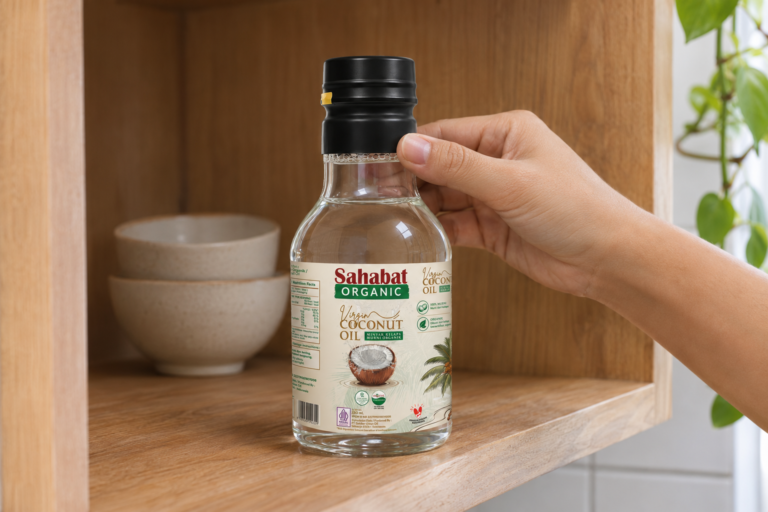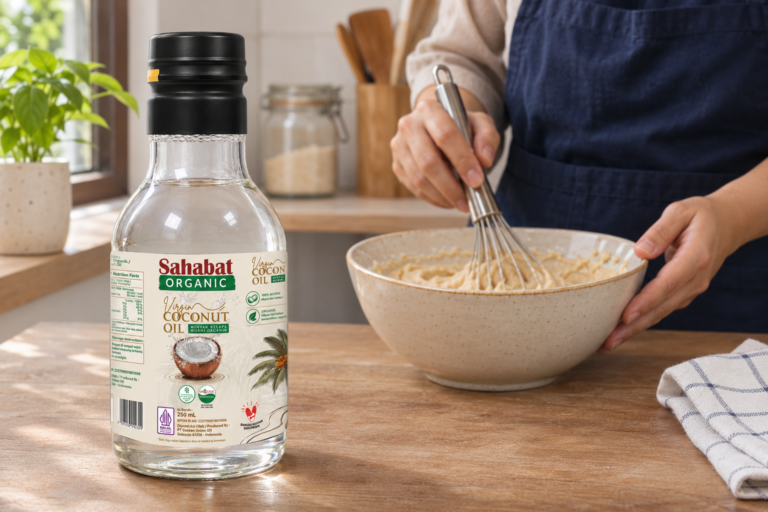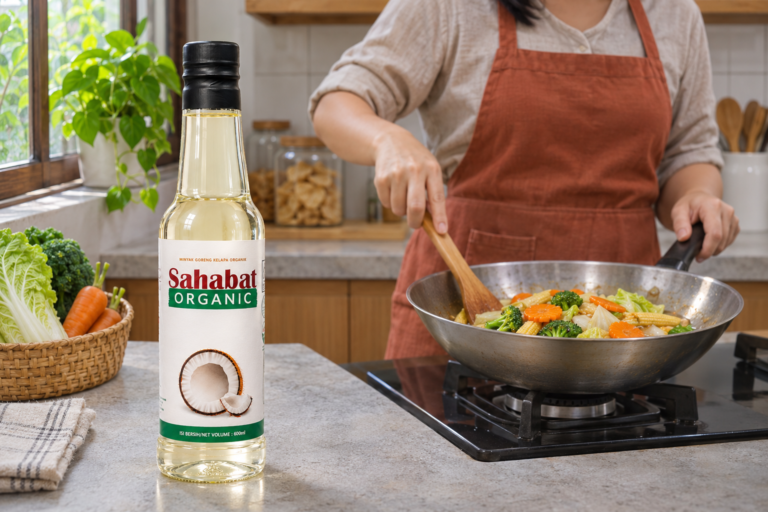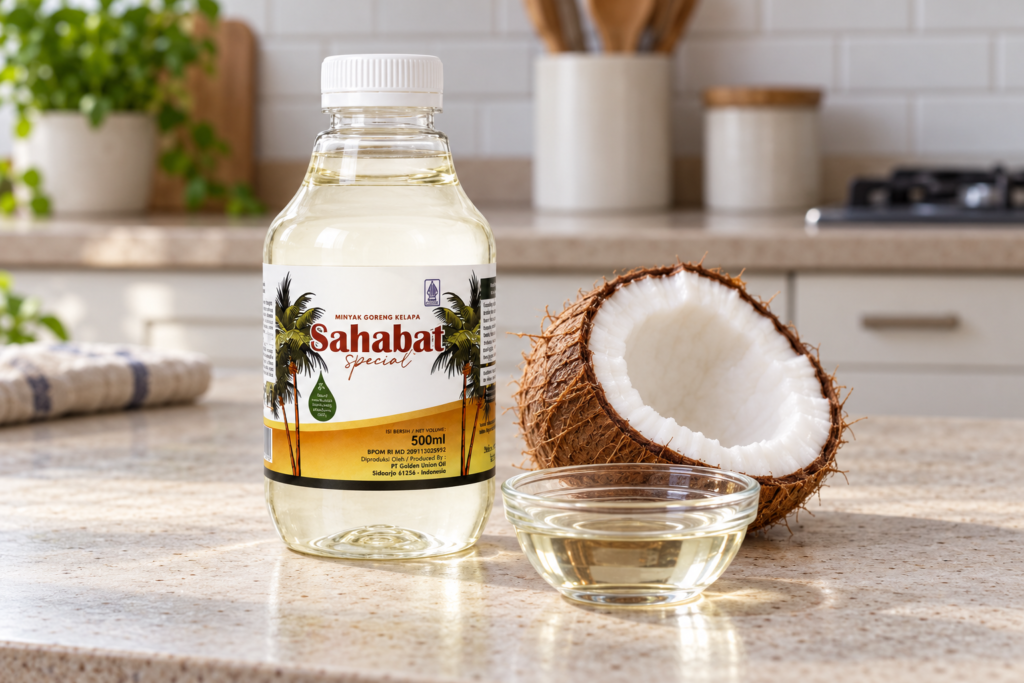
Coconut oil is a plant-based oil extracted from the white flesh, or kernel, of mature coconuts. It is used in cooking, baking, and food production. The two main types you will encounter are virgin coconut oil and refined coconut oil, which differ in processing and flavor.
The Codex standard for named vegetable oils identifies coconut oil as oil derived from the kernel of the coconut palm, Cocos nucifera L. It comes from the coconut flesh—not the coconut water inside the fruit. fao.org
Understanding the different types can help you choose a product that suits your recipe, preferred aroma, and preparation method.
Table of Contents
What Is Coconut Oil? A Quick Overview
| Question | Quick answer |
|---|---|
| Where does it come from? | The white flesh of mature coconuts |
| What are the main types? | Virgin coconut oil and refined coconut oil |
| Does it always taste like coconut? | No. Aroma and flavor depend on processing |
| Is it always liquid? | No. Ordinary coconut oil can become solid in cooler conditions |
| What is it used for? | Cooking, baking, snacks, and food manufacturing |
| How should you choose it? | Compare flavor, intended use, ingredients, and product specifications |
How Is Coconut Oil Made?
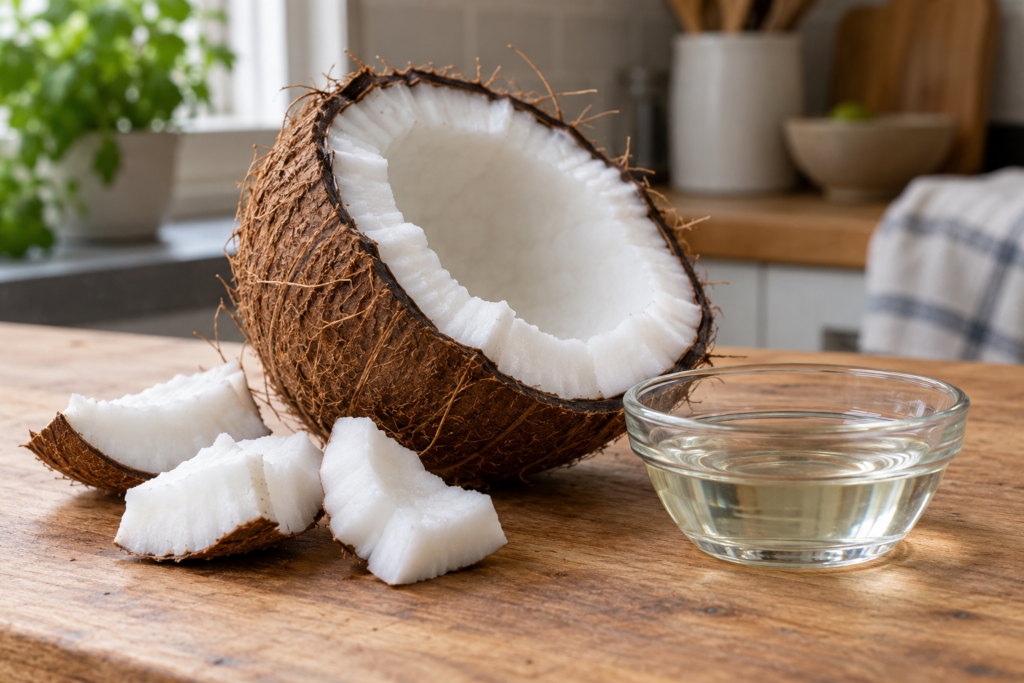
Coconut oil production starts with mature coconut flesh. The extraction and processing steps depend on the type of oil being produced.
Virgin Coconut Oil
Virgin coconut oil, often abbreviated as VCO, is made from fresh coconut flesh. Producers may use mechanical pressing or methods that separate the oil from coconut milk.
VCO generally retains a characteristic coconut aroma and flavor. Processing methods vary, so “virgin” should not automatically be interpreted as “cold-pressed.” Check the manufacturer’s description if the extraction method matters to you.
Refined Coconut Oil
Refined coconut oil is commonly produced from dried coconut flesh, known as copra. The extracted oil undergoes further processing to achieve the required quality and sensory characteristics.
You may see the term RBD, meaning refined, bleached, and deodorized. In oil processing, bleaching uses adsorbent materials to help remove pigments and other unwanted components. Deodorization reduces volatile substances responsible for odors and flavors.
As a result, RBD coconut oil generally has little or no characteristic coconut aroma. Oklahoma State University
For a closer look at this process, read Apa Itu RBDCNO? Proses, Kegunaan, dan Perbedaannya dengan VCO.
Virgin vs Refined Coconut Oil: Which Should You Choose?
The practical starting point is the flavor you want in the finished food.
| Consideration | Virgin coconut oil | Refined coconut oil |
|---|---|---|
| Typical flavor | Noticeable coconut character | Generally neutral or much milder |
| Recipe direction | Coconut flavor is welcome | Other ingredients should lead the flavor |
| Examples to test | Coconut-forward cakes, granola, and sweet snacks | Savory cooking, popcorn, and neutral-flavored baked goods |
| What to verify | Extraction method and aroma | Refining description and intended cooking use |
Harvard’s Nutrition Source recommends choosing refined coconut oil when coconut flavor is unwanted. The Nutrition Source
Neither option is automatically the best choice for every recipe. Test a small batch using your usual ingredients and preparation method.
Why Does Coconut Oil Become Solid?
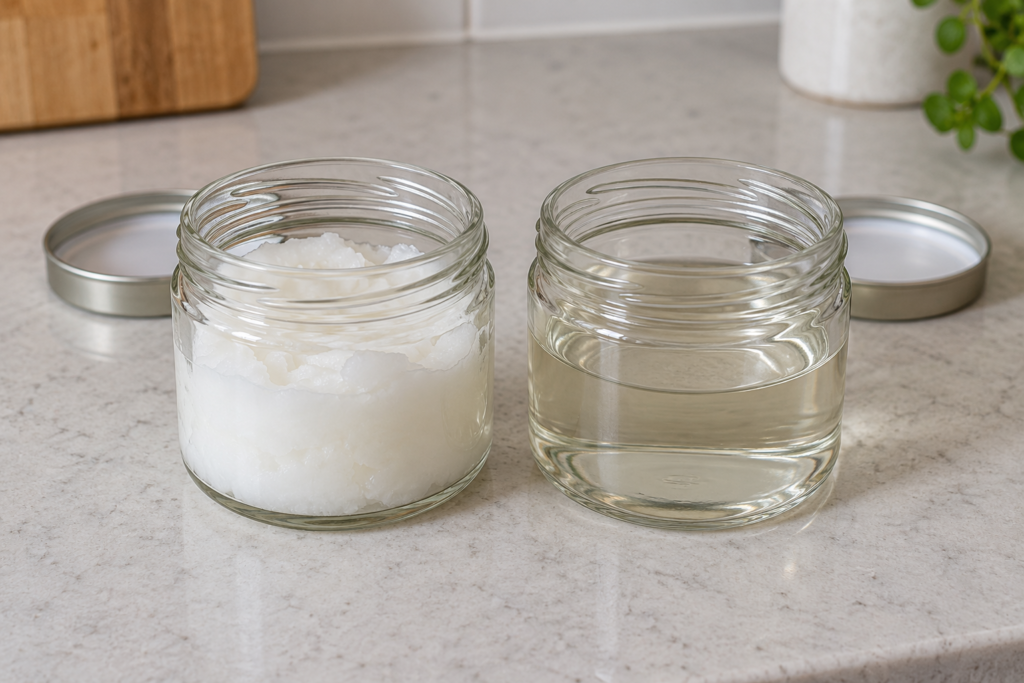
Ordinary coconut oil changes texture as the temperature changes. It can appear white and firm in cooler conditions, soften as it warms, and become clear when fully melted.
Its melting point is around 24°C or 76°F, although the exact behavior varies with the product. This explains why the same oil may be liquid in a warm kitchen and solid in an air-conditioned room. The Nutrition Source
Solidification alone does not mean the oil has spoiled. Appearance should be considered alongside storage history, the product label, and any unusual changes.
For more detail, read Mengapa Minyak Kelapa Bisa Memadat?.
What Is Coconut Oil Used For?
Everyday Cooking
Food-grade coconut oil can be used in suitable savory recipes. Choose a product labeled for cooking and follow its preparation guidance.
For dishes where seasoning should remain the main flavor, start by testing a refined option. If coconut aroma is part of the intended recipe, consider VCO.
Baking
Coconut oil is used in baked goods and can contribute coconut flavor when an unrefined variety is selected. The American Society of Baking identifies coconut oil as a baking ingredient and notes the flavor contribution of virgin oil. American Society of Baking
Pay attention to whether the recipe calls for the oil to be solid, softened, or melted. These states are not interchangeable in every mixing method.
When replacing another fat, start with a recipe developed for coconut oil or test a small batch before making a larger quantity.
Popcorn and Snacks
Coconut oil can be used in suitable stovetop popcorn recipes. The amount and preparation method should follow the recipe or equipment instructions.
For recipe development, compare finished batches under the same conditions. Evaluate the flavor immediately after preparation and again at the temperature at which the snack will be served.
Foodservice and Manufacturing
Business buyers should assess more than the oil’s name. Relevant factors include:
- Aroma and flavor consistency.
- Product specifications.
- Packaging and dispensing requirements.
- Storage conditions.
- Batch traceability.
- Performance in the actual recipe.
A documented sample trial helps determine whether a product fits the operation.
Is Coconut Oil the Same as Other Coconut Products?
Several ingredients come from coconuts, but they serve different purposes.
| Product | What it is | Key distinction |
|---|---|---|
| Coconut oil | Oil separated from coconut flesh | Used primarily as a fat |
| Coconut milk | A water-based emulsion extracted from coconut flesh | Adds liquid, fat, and coconut flavor |
| Coconut water | The liquid naturally present inside the coconut | A beverage ingredient, not cooking oil |
| Desiccated coconut | Dried coconut flesh in small particles | Adds coconut solids and texture |
Coconut milk and coconut oil are therefore not direct substitutes. Replacing one with the other changes the balance of liquid, fat, and solids in a recipe.
Coconut oil is also different from specialized MCT oil. Findings about a particular MCT formulation should not automatically be applied to ordinary coconut oil. The Nutrition Source
What Does Coconut Oil Contain?
Coconut oil consists almost entirely of fat, with a high proportion of saturated fatty acids. Lauric acid is its predominant fatty acid.
Although it comes from a plant, coconut oil is not a significant source of the fiber found in coconut flesh. Its nutritional composition differs from whole coconut. The Nutrition Source
For product-specific information, read the nutrition panel and serving size on the package.
How to Choose Coconut Oil
Use these five checks when comparing products:
- Confirm the intended use. Choose food-grade oil for cooking and baking.
- Choose your flavor profile. Decide whether coconut aroma should be noticeable.
- Read the ingredients. Check whether the product contains only coconut oil or additional ingredients.
- Match the packaging to consumption. Consider how easily you can measure, dispense, and store it.
- Check product information. Review storage instructions, date markings, and supplier specifications.
If organic certification is a purchasing requirement, verify the certification for the specific product. Do not use the word “organic” alone to infer flavor or cooking performance.
How to Store Coconut Oil
Follow the instructions on the package. In general, keep coconut oil tightly closed in a cool, dark location. Storage life depends on the product and its handling; avoid assuming that every coconut oil has the same shelf life. The Nutrition Source
Use clean, dry utensils when removing oil from a container. Keep the original label and batch information if you transfer some oil into a smaller working container.
Choosing Coconut Oil with Sahabat
Whether you are preparing meals at home or evaluating ingredients for a food business, begin with your recipe requirements.
Contact Sahabat to discuss coconut oil options, product specifications, and available packaging. Share your preferred flavor, preparation method, and estimated usage so you can assess a suitable product.
For business purchases, request a sample trial before committing to a larger volume.
Frequently Asked Questions
What is coconut oil made from?
Coconut oil is extracted from the white flesh, or kernel, of mature coconuts. It is not extracted from coconut water.
Is VCO the same as coconut oil?
VCO is a type of coconut oil. The broader category also includes refined coconut oil. Read more in Apa Itu Virgin Coconut Oil?.
Does all coconut oil smell like coconut?
No. Virgin coconut oil generally retains coconut aroma, while refined and deodorized coconut oil usually has much less.
Can you use coconut oil for baking?
Yes. Use food-grade coconut oil and follow a suitable recipe, including its instructions for using the oil solid, softened, or melted.
Is solid coconut oil spoiled?
Not necessarily. Becoming solid in cooler conditions is a normal physical change. Assess other changes and follow the manufacturer’s storage guidance.
Masak Lebih Sehat dengan Minyak Goreng Kelapa Sahabat
100% minyak kelapa murni untuk rumah tangga, usaha, dan industri. Belanja online atau hubungi tim kami.