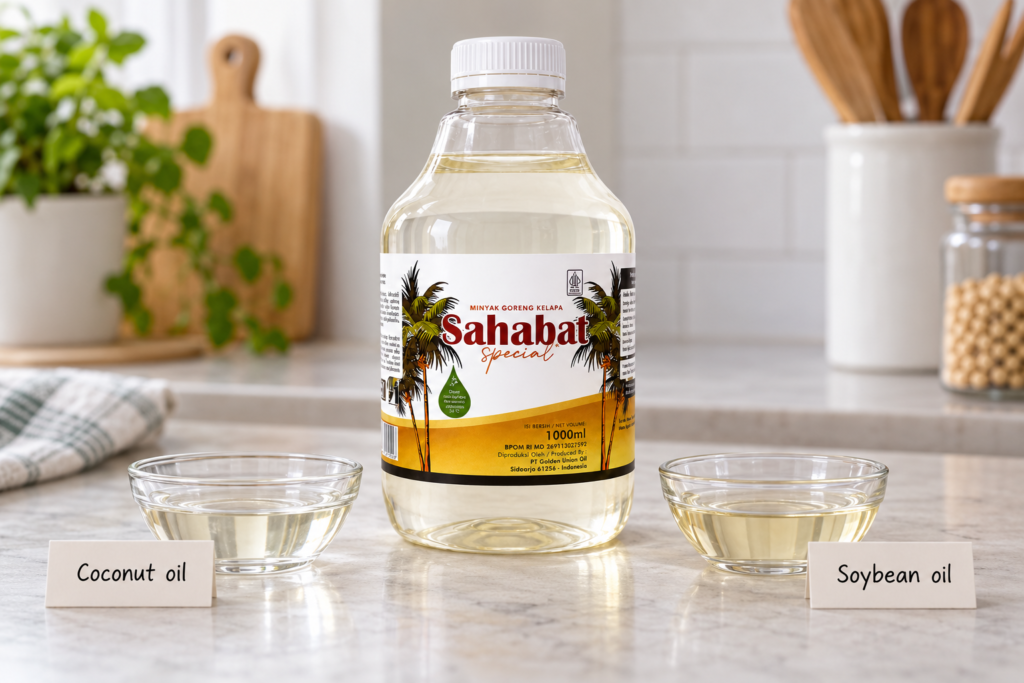
Is coconut oil the same as vegetable oil? Coconut oil belongs to the vegetable oil category because it comes from a plant. However, it is not necessarily the same as the oil sold under a generic “vegetable oil” label. The ingredients, flavor, and behavior in recipes can differ.
This distinction matters in the kitchen. Two oils can both be plant-based yet differ in flavor, consistency, and how they behave when food cools.
If you are considering replacing vegetable oil with coconut oil, start by checking the ingredients on your current bottle and the role the oil plays in your recipe.
Table of Contents
What Does “Vegetable Oil” Mean?
“Vegetable oil” is a broad category covering oils obtained from plant sources. Coconut, soybean, sunflower, canola, olive, and palm oils all belong to that category.
On a product label, however, “vegetable oil” may describe a particular oil rather than a mixture. For example, Crisco’s Pure Vegetable Oil lists soybean oil as its ingredient. A bottle does not have to contain several oils to carry that name. Crisco Vegetable Oil, Cooking Oil
In recipes, the term often refers to a mild-tasting liquid cooking oil. The writer may expect an oil that blends easily into batter without contributing a strong flavor.
The ingredient list tells you more than the product name alone. Before comparing coconut oil with vegetable oil, identify which oil you are actually replacing.
Is Coconut Oil the Same as Vegetable Oil? A Practical Comparison
The table below compares ordinary coconut oil with common liquid oils such as soybean or canola oil. It does not describe every product sold as vegetable oil.
| Feature | Coconut oil | Common liquid vegetable oils |
|---|---|---|
| Plant source | Coconut flesh | Depends on the product, such as soybeans or canola seeds |
| Flavor | Virgin oil generally has coconut character; refined oil is usually milder | Refined versions are generally mild |
| Consistency | Can become solid or semisolid in cooler conditions | Soybean and canola oils generally remain liquid at typical indoor temperatures |
| Mixing into batter | May need melting and attention to ingredient temperature | Usually ready to pour and mix |
| Behavior after cooling | Can contribute a firmer texture | Usually remains fluid |
| Purchasing check | Confirm refined or virgin, intended use, and ingredients | Identify the actual oil or blend |
For background on the two main coconut oil types, see our guides to virgin coconut oil and refined coconut oil, or RBDCNO.
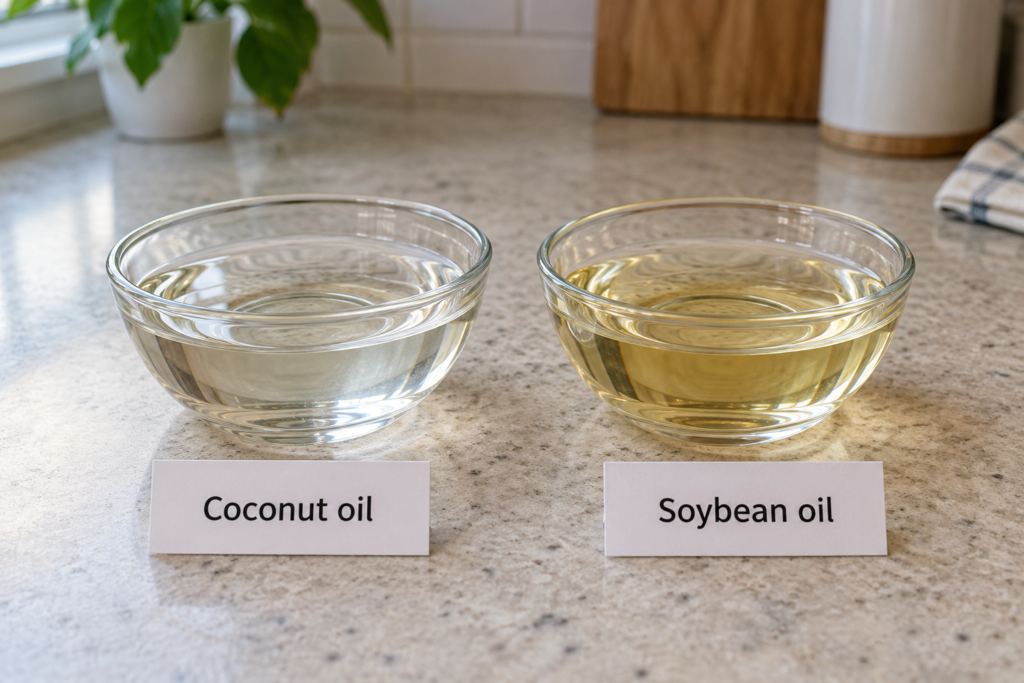
Three Differences That Matter in Recipes
1. Flavor Depends on the Type of Coconut Oil
Virgin coconut oil generally retains a coconut aroma. Refined and deodorized coconut oil has much less of that characteristic flavor because processing removes many of the volatile compounds responsible for it. extension.okstate.edu
For a coconut-flavored cake, that aroma may be welcome. For a delicate vanilla cake or savory dish, a neutral-tasting oil may fit the recipe better.
When testing a replacement, taste the finished food. Smelling the oil in its container does not tell you exactly how noticeable it will be after cooking and seasoning.
2. Coconut Oil Responds Differently to Temperature
Ordinary coconut oil can be firm in a cool room and liquid in a warm kitchen. NOW Foods explains that its coconut oil changes consistency around its melting range and can show white clumps while partially melted. NOW Foods
This temperature sensitivity affects measuring and mixing. A spoonful of loosely packed solid oil is not as straightforward to measure as a level quantity of liquid oil.
For a recipe that requires liquid oil, melt the coconut oil gently before measuring by volume. If the recipe gives a weight, use a kitchen scale.
You can read more about this behavior in why coconut oil solidifies.
3. The Finished Texture May Change
Replacing one fat with another can change the texture of baked goods. King Arthur Baking’s comparison of fats in gluten-free recipes found differences in results and highlighted the importance of coconut oil’s temperature-sensitive consistency. Those tests illustrate why substitution should be evaluated recipe by recipe. King Arthur Baking
A cake that seems soft when warm may feel different after cooling. A refrigerated topping may become firmer than one made with a liquid oil.
Evaluate food at its intended serving temperature, especially if it will be refrigerated, displayed in an air-conditioned room, or held before serving.
Can You Replace Vegetable Oil with Coconut Oil?
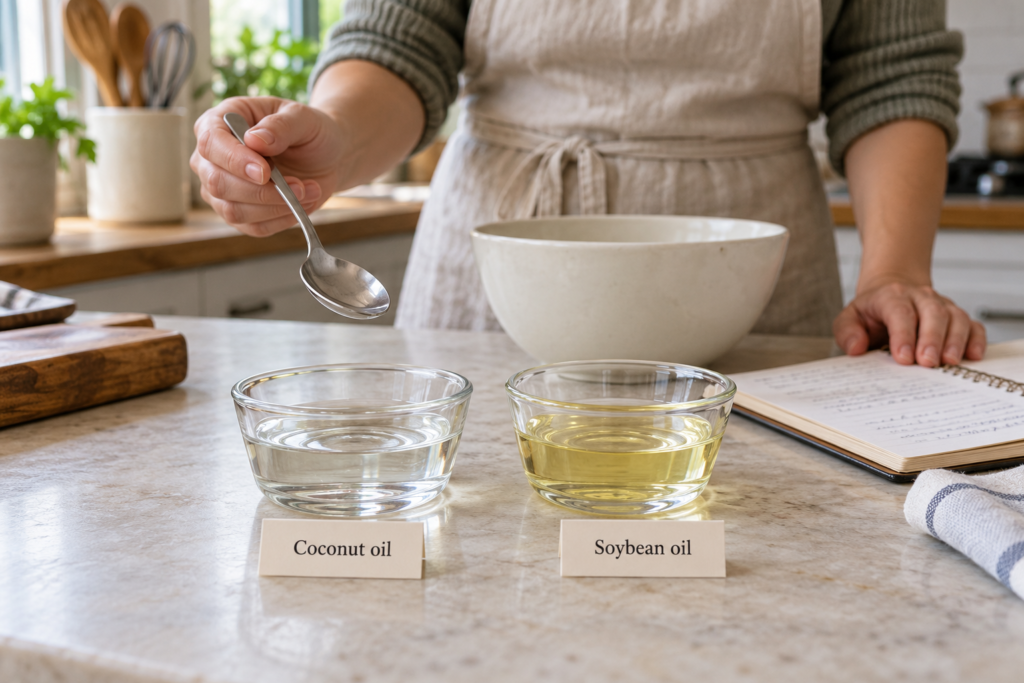
Often, yes—but an equal amount does not guarantee an identical result. The most useful starting point is a recipe that already uses liquid oil, rather than one that relies on creaming a solid fat.
For a small trial in an oil-based cake, muffin, or quick bread, an equal volume of melted coconut oil can be a starting point unless the recipe provides different instructions. Treat this as a test, not a universal substitution rule.
Follow these steps:
- Check the original oil. Identify whether the recipe specifies a particular oil or simply says “vegetable oil.”
- Choose the flavor. Consider refined coconut oil for a milder result or virgin coconut oil when coconut character is welcome.
- Prepare the right consistency. If the recipe requires liquid oil, use fully melted coconut oil that is warm rather than hot.
- Avoid a large temperature difference. Very cold ingredients can cause melted coconut oil to firm up during mixing.
- Make a small batch. Keep the other ingredients and preparation steps unchanged.
- Assess after cooling. Compare flavor, texture, and portion consistency under normal serving conditions.
If the recipe author provides coconut oil substitution instructions, follow those first.
When Is Coconut Oil a Useful Option?
Coconut oil is worth testing when its flavor or temperature-dependent texture suits the dish.
| Application | What to consider |
|---|---|
| Cakes and muffins | Flavor, mixing temperature, and texture after cooling |
| Granola | How evenly the melted oil coats the ingredients |
| Stovetop popcorn | Desired aroma and the recipe’s oil quantity |
| Savory cooking | Whether coconut flavor complements the seasoning |
| Chilled toppings or desserts | Whether a firmer finish is desirable |
It may be less convenient for a cold dressing that needs to remain freely pourable. In that case, the oil’s behavior at the actual serving temperature matters more than whether both products belong to the vegetable oil category.
Can You Use Them Interchangeably for Frying?
Do not assume two oils have the same frying performance simply because both are vegetable oils.
Check the specific product’s intended cooking use and the equipment instructions. Refining, oil composition, operating temperature, and cooking conditions all matter. There is no single smoke point that describes every vegetable oil.
For a restaurant trial, keep the food, batch size, and cooking method consistent. Record:
- Flavor and aroma of the finished food.
- Browning and texture.
- Oil consumption per batch.
- Handling and dispensing requirements.
- Supplier guidance for the intended application.
Avoid assigning a fixed number of reuse cycles based only on the oil’s name.
How to Choose the Right Oil for Your Kitchen
Start with what the recipe needs.
If the priority is a neutral flavor and easy pouring in cooler conditions, identify a suitable liquid oil. If you want coconut character or a fat that becomes firmer as it cools, coconut oil may fit the recipe.
For commercial purchasing, ask for the product specification and a sample before changing your standard ingredient. Compare performance in your own recipe rather than relying only on price per container.
The right comparison is a specific coconut oil against a specific alternative, prepared and served under the same conditions.
Frequently Asked Questions
Is coconut oil considered vegetable oil?
Yes. Coconut oil comes from coconut flesh, making it a plant-derived oil within the vegetable oil category.
Does a bottle labeled vegetable oil contain coconut oil?
Not necessarily. It may contain another oil or a blend. Read the ingredient list to identify its contents.
Can I replace vegetable oil with coconut oil in cake?
Often, you can test melted coconut oil in a cake recipe that calls for liquid oil. Choose the appropriate flavor and check the cake’s texture after cooling. Follow recipe-specific substitution guidance when available.
Will coconut oil make every dish taste like coconut?
No. Virgin coconut oil generally contributes more coconut aroma, while refined and deodorized coconut oil is typically much milder.
Is coconut oil the same as palm oil?
No. Coconut oil comes from the coconut palm, while palm oil comes from the fruit of the oil palm. They are different oils even though both are plant-derived.
Find Coconut Oil for Your Kitchen or Business
Considering coconut oil for home cooking, a restaurant menu, or food production? Tell the Sahabat team what you plan to make and the quantity you need.
Ask about refined coconut oil and VCO options, packaging sizes, product specifications, and pricing.
Chat with Sahabat on WhatsApp →
Masak Lebih Sehat dengan Minyak Goreng Kelapa Sahabat
100% minyak kelapa murni untuk rumah tangga, usaha, dan industri. Belanja online atau hubungi tim kami.