Choosing coconut oil for popcorn starts with the flavor you want. Refined coconut oil generally suits popcorn with a neutral taste, while virgin coconut oil can add a noticeable coconut aroma. For commercial popcorn machines, the oil must also match the equipment’s operating and dispensing requirements.
The right choice depends on your recipe, preparation method, and serving conditions. Here is how to compare the options before buying.
Table of Contents
Choosing Coconut Oil for Popcorn: A Quick Guide
| Your goal | Option to consider | What to check |
|---|---|---|
| Let the corn and seasoning flavors stand out | Refined coconut oil | Neutral aroma and suitability for cooking |
| Add coconut character to the recipe | Virgin coconut oil | Flavor intensity in the finished popcorn |
| Prepare popcorn in a commercial kettle | Coconut oil or a formulated popping oil approved for the equipment | Machine instructions, ingredients, and dispensing requirements |
| Add oil after popping | Food-grade coconut oil suitable for your recipe | Amount used, flavor, and mouthfeel after cooling |
| Make popcorn with a short ingredient list | A product listing only coconut oil | Full ingredient declaration rather than front-label wording alone |
Start with refined coconut oil if you want minimal coconut flavor. Choose virgin coconut oil when its aroma is part of the recipe. Refining, particularly deodorization, reduces the characteristic coconut smell and taste. Oklahoma State University
1. Decide Whether You Want Coconut Flavor
Before comparing pack sizes or prices, decide how the popcorn should taste.
For plain salted popcorn, you may want the flavor of the corn to remain the main feature. For a coconut-inspired sweet snack, a noticeable coconut aroma may be welcome.
Refined coconut oil
Refined coconut oil is a practical starting point for recipes where coconut flavor is unwanted. Harvard’s Nutrition Source specifically identifies refined coconut oil as an option when you do not want a coconut taste. The Nutrition Source
Consider testing it with:
- Plain salt.
- Cheese-style seasonings.
- Barbecue or chili seasoning.
- Caramel coatings where coconut is not part of the intended flavor.
Virgin coconut oil
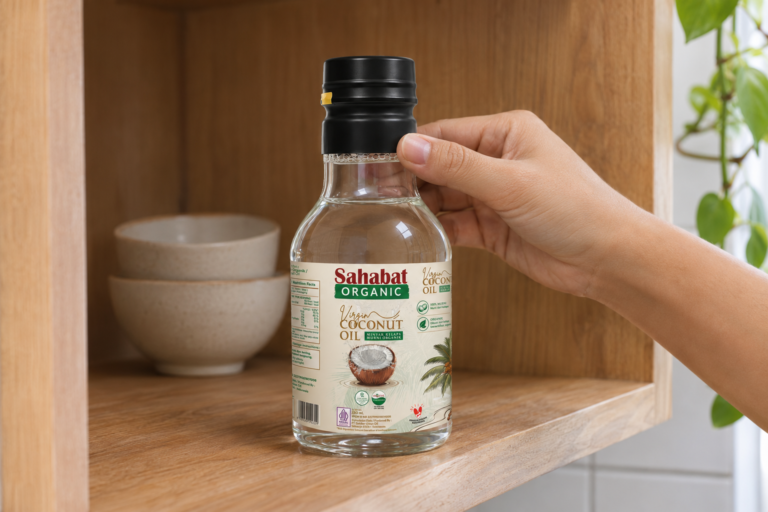
Virgin coconut oil generally retains more coconut aroma and flavor. That character may complement sweet recipes, but the result still depends on the particular oil and the amount used. Oklahoma State University
Try a small batch with cinnamon sugar, chocolate, or toasted coconut. Taste the finished popcorn before deciding whether the coconut note improves the recipe.
For more on flavor differences, read our guide: Does Coconut Oil Always Taste Like Coconut?
2. Distinguish Popping Oil from Topping Oil
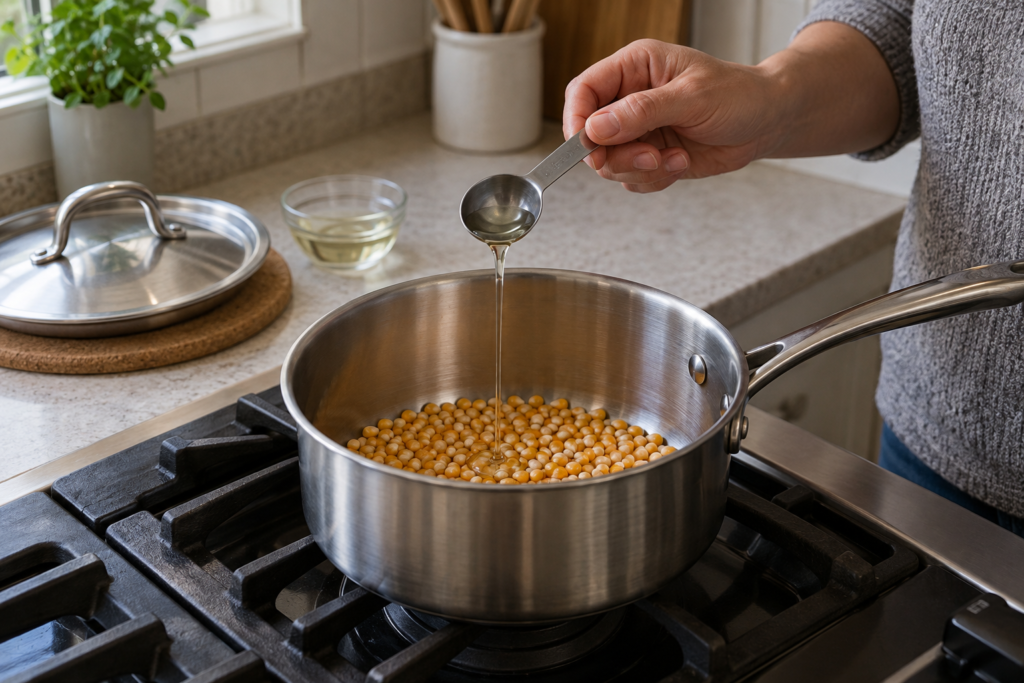
Oil used to cook popcorn and oil added after popping have different roles.
Popping oil goes into the pan or kettle with the kernels. Topping oil is added to the finished popcorn for flavor and coating.
Commercial suppliers sell separate popping and topping products, including coconut popping oils and buttery toppings. These names should not be treated as interchangeable. Ventura Foods
When choosing a product, check:
- Whether it is intended for popping, topping, or both.
- Whether it contains only coconut oil or a blend.
- Whether flavorings or colors are included.
- Whether the manufacturer provides preparation instructions.
Plain coconut oil will not automatically recreate a buttery cinema-style flavor. The finished result also depends on the seasoning, topping, and recipe.
3. Match the Oil to Your Equipment

A household saucepan and a commercial popcorn machine may require different preparation methods.
For stovetop popcorn
Choose a food-grade coconut oil labeled for cooking. Follow a reliable stovetop recipe and use a pan large enough for the kernels to expand.
Coconut oil is used in published popcorn recipes, including Bob’s Red Mill’s kettle corn recipe, which begins by melting the oil over medium heat. Bob’s Red Mill Natural Foods
Avoid treating maximum burner heat as a shortcut. Control the heat throughout cooking and do not continue heating oil that is smoking.
For commercial popcorn machines
Check the equipment manual before changing oils. Confirm the recommended oil quantity, batch size, and whether the machine supports oils that can solidify.
For systems with pumps or supply lines, ask the equipment supplier whether temperature control is needed to keep the chosen oil flowing.
For hot-air poppers
Follow the appliance instructions. Do not add coconut oil to a popping chamber designed to operate without oil. If suitable for your recipe, add a small amount to the finished popcorn in a separate bowl.
4. Read the Ingredient List
The words “coconut oil” on the front of a package do not replace the ingredient declaration.
For a straightforward recipe, you may prefer a product that lists only coconut oil. For a specific concession-style result, a formulated popping oil may be worth evaluating.
Check the label or supplier specification for:
| Information | Why it matters |
|---|---|
| Oil type | Helps you compare refined and virgin options |
| Full ingredients | Identifies blends, flavors, and colors |
| Intended application | Helps distinguish cooking oil from topping products |
| Storage instructions | Guides handling before and after opening |
| Batch and date information | Supports stock rotation and traceability |
| Allergen information | Matters when evaluating flavored products and the finished recipe |
If organic certification is part of your purchasing requirements, verify it separately. Organic status alone does not tell you whether an oil will taste neutral or coconut-forward.
5. Test the Popcorn at Serving Temperature
Freshly popped popcorn is only one part of the evaluation.
Coconut oil changes between solid and liquid states with temperature. Its behavior as the popcorn cools makes serving-temperature testing useful, particularly when oil is added as a topping. The Nutrition Source
For a practical comparison:
- Use the same kernels, equipment, and batch size.
- Measure the same amount of each oil.
- Keep seasoning quantities consistent.
- Taste each batch while warm.
- Taste again after your usual waiting or holding period.
- Record aroma, crispness, coating, and any greasy or waxy sensation.
This trial helps you choose an oil for the way the popcorn will actually be served.
6. Compare Cost per Batch
For cafés, snack businesses, and foodservice operators, the lowest price per container may not produce the lowest cost per serving.
Compare oils using a consistent recipe:
Oil cost per batch = oil used in milliliters ÷ 1,000 × oil price per liter
Then divide the batch cost by the number of sellable portions.
Also consider dispensing losses, ease of measuring, storage space, and how quickly an opened pack will be used. A larger pack is useful only when it fits the operation.
Before ordering in volume, request a sample and test it with your actual kernels and seasonings.
Common Mistakes When Choosing Coconut Oil for Popcorn
| Mistake | Better approach |
|---|---|
| Assuming every coconut oil tastes the same | Compare refined and virgin oils in a finished batch |
| Expecting plain coconut oil to provide buttery flavor | Evaluate the complete seasoning and topping recipe |
| Choosing by appearance alone | Read the label and product specifications |
| Adding oil to an air popper without checking instructions | Follow the appliance manufacturer’s directions |
| Using extra oil to compensate for poor popping | Check the recipe, kernels, batch size, and heat |
| Evaluating popcorn only when it is very hot | Taste it under normal serving conditions |
| Buying bulk before testing | Start with a measured small-batch comparison |
Choosing a Sahabat Coconut Oil Product for Your Recipe
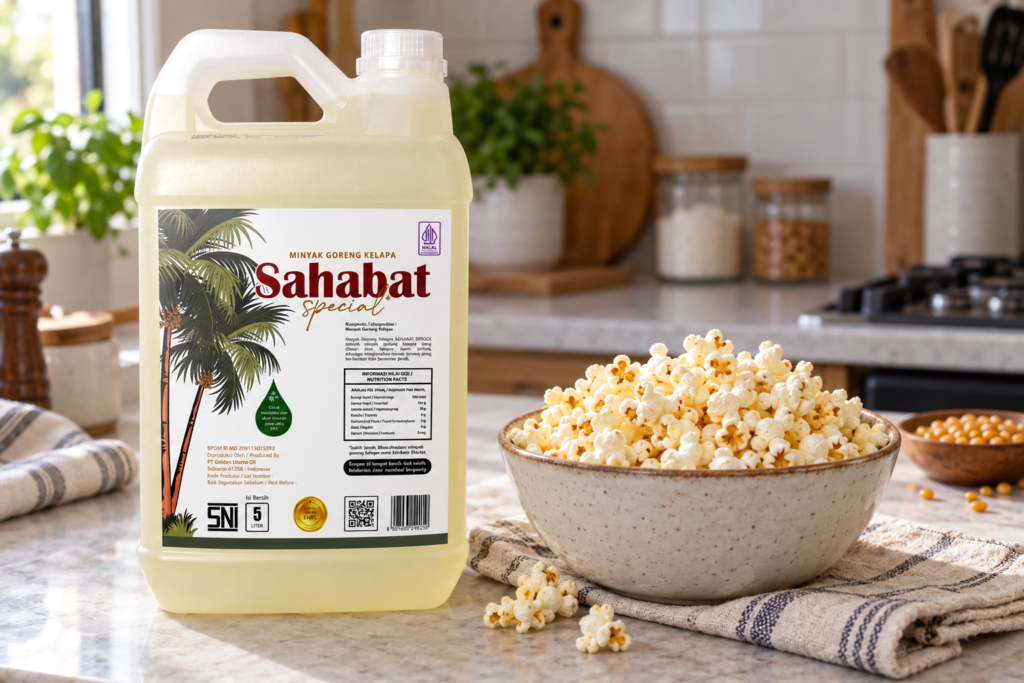
When evaluating Sahabat coconut oil for popcorn, begin with your preferred flavor profile and preparation method.
Ask the Sahabat team for the relevant product specifications, available packaging, and recommended cooking applications. For foodservice use, share your equipment type, batch size, and estimated consumption so you can assess a suitable option.
A sample trial provides a practical basis for choosing before placing a larger order.
Frequently Asked Questions
Can you use coconut oil to make popcorn?
Yes. Food-grade coconut oil can be used in suitable stovetop popcorn recipes and compatible commercial equipment. Follow the recipe and equipment instructions.
Is refined or virgin coconut oil better for popcorn?
Refined coconut oil is generally the better starting point when you want a neutral flavor. Virgin coconut oil suits recipes where coconut aroma is welcome. Test both if flavor preference is uncertain.
Will coconut oil make popcorn taste like coconut?
Virgin coconut oil can contribute coconut flavor. Refined and deodorized coconut oil generally has much less coconut aroma and taste. Check the specific product rather than assuming all coconut oils are identical.
Can you pour coconut oil over popcorn after popping?
Yes. Melted food-grade coconut oil can be drizzled over popped popcorn and tossed through. Begin with a small amount, distribute it evenly, and check the texture after cooling. Bob’s Red Mill also uses coconut oil as a drizzle in its Everything Bagel Popcorn recipe. Bob’s Red Mill Natural Foods
How much coconut oil should you use?
Use the amount specified by your recipe or popcorn machine manufacturer. There is no single ratio suitable for every pan, kettle, kernel quantity, and preparation method.
Masak Lebih Sehat dengan Minyak Goreng Kelapa Sahabat
100% minyak kelapa murni untuk rumah tangga, usaha, dan industri. Belanja online atau hubungi tim kami.