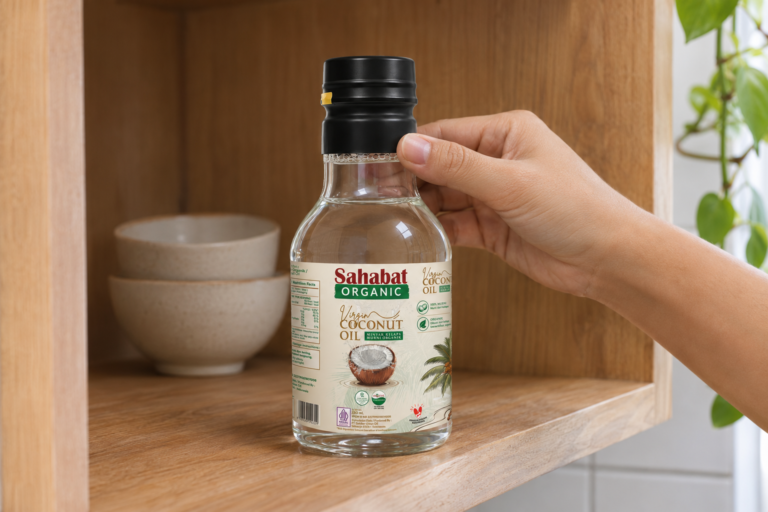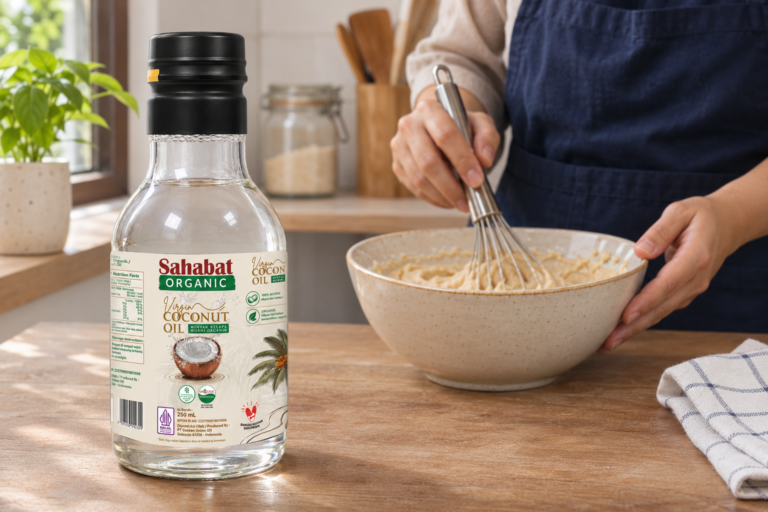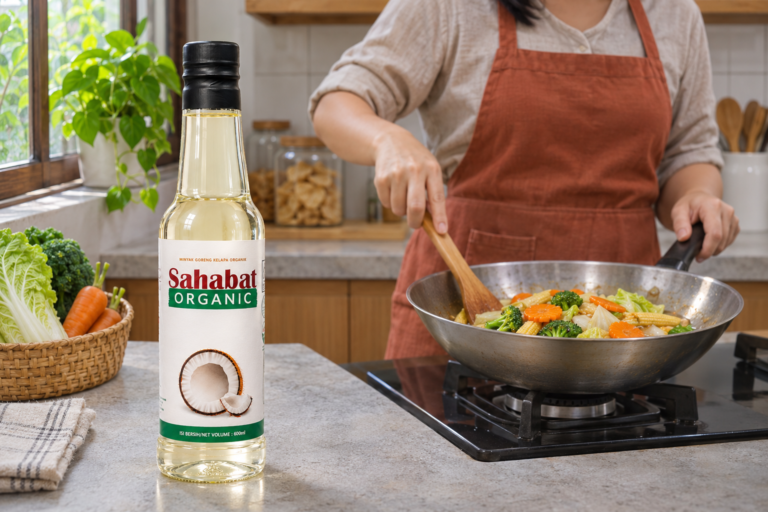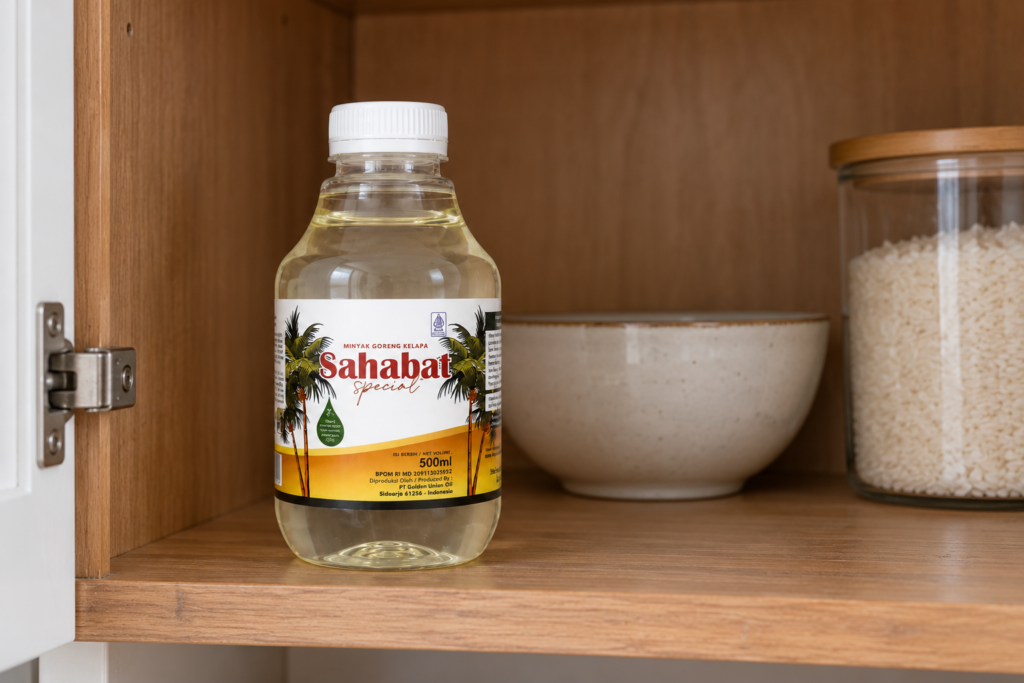
If you are wondering how to store coconut oil after opening, keep it tightly closed in a cool, dry place away from direct sunlight and cooking heat. Use clean, dry utensils and follow the storage instructions on the product label.
Many coconut oils do not require refrigeration, but the correct approach depends on the product. For example, NOW Foods allows its organic virgin coconut oil to be refrigerated or stored at cool room temperature after opening, while LouAna states that refrigeration is unnecessary for its refined coconut oil. NOW Real Food
Good storage habits help protect the oil’s quality and make everyday handling easier. This guide covers practical steps for home kitchens, restaurants, bakeries, and catering businesses.
Table of Contents
How to Store Coconut Oil: Quick Storage Guide
| Storage question | Practical guidance |
|---|---|
| Where should I keep it? | In a dry cupboard or pantry away from heat and sunlight |
| Should the container stay closed? | Yes—close it securely after dispensing |
| Does it need refrigeration? | Check the label; many products do not require it |
| What utensil should I use? | A clean, completely dry spoon or suitable dispenser |
| What if it becomes solid? | Check the temperature; solidification alone does not indicate spoilage |
| How long does it last after opening? | Follow the product’s date marking and any after-opening instructions |
1. Choose a Storage Location Away from Heat and Light
A convenient place beside the stove may not be the best place to store your main supply of coconut oil.
NOW Foods recommends a cool, dry, dark environment and a tightly sealed original container for its virgin coconut cooking oil. NOW Real Food
In practice, consider a cupboard away from the oven, a dry pantry shelf, or a designated ingredient storage area.
Avoid placing the container:
- Beside a hot stovetop or fryer.
- On a windowsill receiving direct sunlight.
- Near steam from a kettle or dishwasher.
- Where splashes can reach the opening or closure.
In a tropical kitchen, “room temperature” can vary considerably. Choose the location according to the conditions around the container, not simply whether it is indoors.
2. Close the Container Securely After Each Use
Leaving a bottle or jar open makes it easier for dust, splashes, and food particles to enter.
After measuring the required amount:
- Check that the rim and closure are clean.
- Replace the original cap or lid.
- Close it securely.
- Return the container to its storage location.
For a jerrycan or bag-in-box, follow the supplier’s instructions for the outlet and closure. Different packaging systems may require different handling.
A damaged cap, leaking seam, or poorly closing outlet should be addressed rather than treated as a minor inconvenience.
3. Use Clean, Dry Utensils
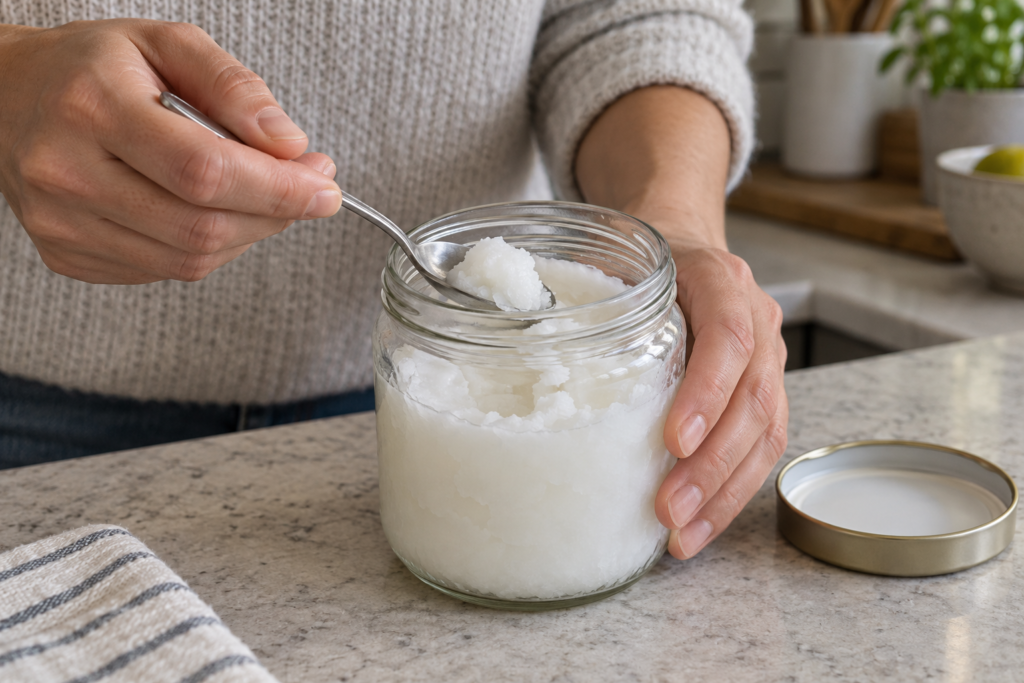
When coconut oil is solid, it may need to be scooped rather than poured.
Use a clean, dry utensil each time. Avoid dipping a spoon into the container after it has touched sauce, batter, raw ingredients, or a wet surface.
The same principle applies to dispensing equipment. A reusable pump or working container needs a suitable cleaning and drying procedure.
For busy kitchens, keeping a dedicated utensil near the oil can make this habit easier to follow. Store the utensil somewhere clean rather than leaving it exposed beside the cooking station.
4. Do Not Mistake Solidification for Spoilage
Coconut oil can become white and solid or semisolid in cooler conditions. It may return to a clearer liquid state as the temperature rises.
The Food Chemicals Codex describes nonhydrogenated coconut oil as having a relatively sharp melting range, changing from a firm state at lower room temperatures to a liquid at warmer temperatures. doi.usp.org
A change in physical state alone does not establish that the oil is spoiled—or that it is suitable to use.
Check it alongside the product’s date marking, storage history, packaging condition, and normal characteristics.
If you need liquid oil for a recipe, follow the manufacturer’s guidance for melting or warming it. Do not place the original container over direct heat unless it is specifically designed and approved for that use.
Read more: Why Does Coconut Oil Solidify? — Indonesian-language guide
5. Check Before Refrigerating
Refrigeration is not automatically necessary for every coconut oil.
Some manufacturers permit storage at cool room temperature after opening. Refrigeration can also make the oil firmer, which may be less convenient when pouring or measuring. Follow the instructions for the specific product you purchased. NOW Real Food
Before choosing a storage method, ask:
- Does the label require refrigeration?
- Is the available cupboard exposed to excessive heat?
- Does the kitchen need the oil in a pourable or scoopable form?
- Can staff follow the chosen method consistently?
Avoid applying advice for plain coconut oil to homemade mixtures containing other ingredients. Those preparations may need different storage controls.
6. Keep the Original Product Information
The original packaging provides useful information, including the product name, batch number, date marking, and storage instructions.
If your kitchen transfers oil into a smaller working container, use a suitable food-contact container that is clean and completely dry. Identify its contents and retain a connection to the original batch.
For business use, record the opening or transfer date where practical.
Avoid repeatedly topping up a partly used container without emptying, cleaning, and drying it according to your kitchen procedure. This makes stock rotation and traceability harder to manage.
7. Do Not Apply One Shelf-Life Figure to Every Product
There is no single after-opening storage period that should be applied to every coconut oil.
Product formulation, packaging, handling, and storage conditions can differ. A general shelf-life statement also may not describe the period after a package has been opened.
Use this sequence:
- Read the printed date marking.
- Look for specific after-opening instructions.
- Follow the stated storage conditions.
- Ask the manufacturer if the instructions are unclear.
Do not assume that opening a container starts a new full shelf-life period.
For Sahabat coconut oil, refer to the current product label or contact the team for guidance on your particular variant and packaging.
Common Coconut Oil Storage Mistakes
Knowing how to store coconut oil also means recognizing everyday habits that can affect its quality. Use the following checklist to review your kitchen routine.
| Mistake | Better practice |
|---|---|
| Keeping the main container beside the fryer | Store it in a designated area away from cooking heat |
| Leaving the cap off between tasks | Close it immediately after dispensing |
| Using a wet spoon | Use a clean, completely dry utensil |
| Treating white, solid oil as automatically spoiled | Assess temperature-related changes alongside other product information |
| Assuming refrigeration is always required | Follow the specific label |
| Transferring oil without identification | Retain product, batch, and date information |
| Using a generic online shelf-life estimate | Check the manufacturer’s instructions |
When Should You Stop Using the Oil?
Stop using the product and assess it if you notice an unexpected unpleasant odor, visible mold, foreign material, or evidence that water or other food has entered the container.
An unfamiliar appearance should be checked against the normal characteristics of that product. Refined coconut oil may naturally have a more neutral aroma than VCO, while ordinary solidification can change its appearance.
Do not taste questionable oil simply to test it. If you are uncertain, contact the supplier with the batch number, photographs, and a description of the storage conditions.
Choosing a Pack Size That Fits Your Kitchen
Storage is easier when the pack size matches your consumption.
A household using small quantities may find a smaller bottle convenient. A restaurant or production kitchen may prefer bulk packaging, provided it has suitable storage and dispensing arrangements.
Before buying, consider how often the container will be opened, where it will be kept, and how staff will measure the oil.
Contact Sahabat Coconut Oil to discuss product information, packaging options, and storage guidance for your kitchen.
Frequently Asked Questions
Does coconut oil need to be refrigerated after opening?
Many products do not require refrigeration, but the label takes priority. Follow the instructions for your specific oil.
Can I store coconut oil in a kitchen cupboard?
Yes, if the cupboard meets the product’s storage instructions and is dry, away from direct sunlight, and protected from cooking heat.
Is coconut oil still usable after it turns white?
A white, solid appearance can result from cooler temperatures. This change alone does not indicate spoilage. Check the product’s other characteristics, packaging, and date marking.
How long does coconut oil last after opening?
Follow the manufacturer’s instructions. Avoid applying one fixed period to every brand, formulation, or packaging format.
Can I transfer coconut oil into another container?
Use a suitable food-contact container that is clean, dry, and securely closable. Keep the product identifiable and retain the original batch and date information.
Masak Lebih Sehat dengan Minyak Goreng Kelapa Sahabat
100% minyak kelapa murni untuk rumah tangga, usaha, dan industri. Belanja online atau hubungi tim kami.