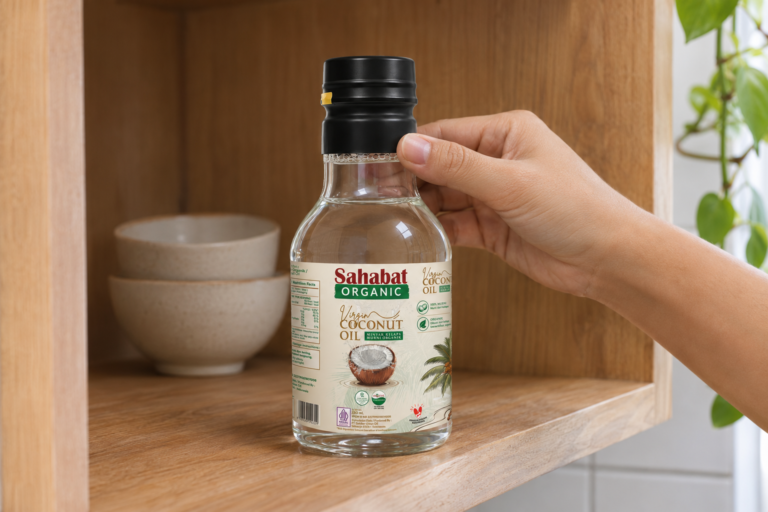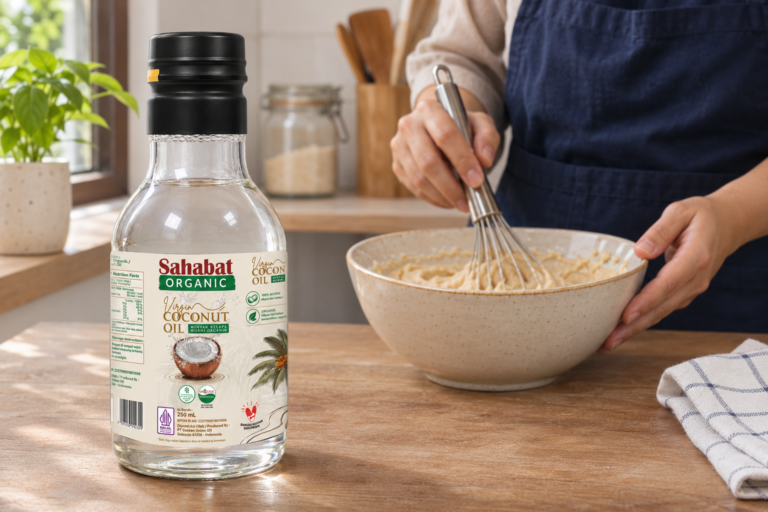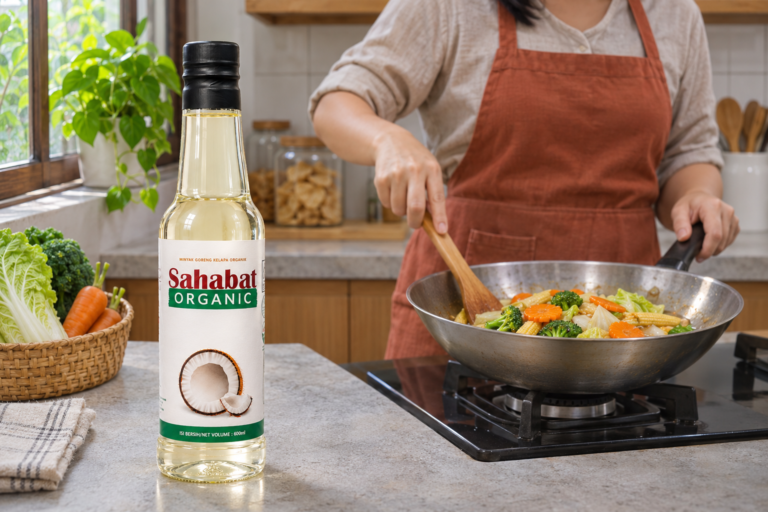
What is organic coconut oil? It’s cooking oil made from coconuts grown and handled according to an organic standard. For someone buying cooking oil, the main benefit is knowing more about what happened before the oil reached the bottle, from how farmers managed pests to how handlers kept organic ingredients separate during processing. Agricultural Marketing Service
But what if you’re standing in the kitchen, about to fry shallots for nasi goreng, and want to know whether the oil will give your rice a coconut flavor? That’s where a second detail on the bottle matters. Organic tells you about production practices. Virgin or refined gives you a better clue about the aroma you can expect in the pan. A bottle can carry both kinds of information. Agricultural Marketing Service
Table of Contents
What does “organic” mean on a coconut oil label?
Imagine two bottles of clear coconut oil on a shelf. They might look alike, even though the coconuts were grown under different conditions. Color and clarity tell you little about what a grower used on the land. An organic claim points to a set of production requirements that a buyer can look up. Agricultural Marketing Service
The USDA organic standard offers one example. It requires growers to manage soil fertility and to use preventive, physical, or biological methods as their first approach to pests. It also restricts which substances growers may use. If you buy organic ingredients because farming practices matter to you, those details explain what the label contributes to your decision. Agricultural Marketing Service
What are the benefits of choosing organic coconut oil?
For a home cook, the benefit is being able to choose oil on the same basis as other organic groceries. If you already choose organic rice or vegetables because you care about how they were grown, you can apply that preference to the spoonful of oil that goes into the wok first. Look for the organic standard or certifier on the packaging when comparing two bottles. Agricultural Marketing Service
For a café buyer, the benefit extends to receiving and reordering. Suppose your café orders organic coconut oil and receives a substitute of the same size. The volume matches, but you still need to know whether the substitute meets your purchasing requirements. Ask the supplier which certification covers the exact product. Under the USDA system, handlers must also take precautions to keep organic and conventional products from mixing during handling and storage. Agricultural Marketing Service
What Is Organic Coconut Oil, and Can It Also Be Virgin?
These terms answer different questions. It helps to read them separately, especially when buying oil for a particular recipe.
| Label term | What it tells you | When it matters in the kitchen |
|---|---|---|
| Organic | The claim concerns how the coconuts were grown and how the product was handled. | You want an oil that meets your organic purchasing preference. (Agricultural Marketing Service) |
| Virgin | Virgin coconut oil generally retains a recognizable coconut aroma. | You want a little coconut character in banana muffins or coconut rice. (The Nutrition Source) |
| Refined | Refining generally gives the oil a more neutral flavor and aroma. | You want garlic, shallots, or spices to lead the dish. (The Nutrition Source) |
For example, an organic virgin coconut oil may suit a baker who wants both an organic ingredient and a coconut aroma. If you’re buying oil for a savory menu, check the product’s processing description and try it in a small batch. For a closer look at how virgin oil is made, read Sahabat’s introduction to VCO.
Does organic coconut oil have health benefits?
When choosing an oil for nutrition, consider its fat composition as well as its production method. Coconut oil is high in saturated fat. Harvard’s The Nutrition Source notes that one tablespoon contains about 12 grams of saturated fat. An organic label describes production practices and, on its own, gives you no basis for expecting a lower saturated fat content. The Nutrition Source
A practical approach is to measure the oil when cooking. If you enjoy coconut aroma in a particular dish, use the amount the recipe needs. For everyday meals, oils richer in unsaturated fats, such as olive or canola oil, can also be part of your kitchen routine. The Nutrition Source
How to choose a bottle for your kitchen
- Start with the dish. For coconut muffins, decide how much coconut aroma you want in the crumb. For tumis buncis, consider whether you want the sliced garlic to be the first thing you smell.
- Read the full product name. Look for the organic designation, then check whether the producer describes the oil as virgin or refined. If the label gives little information about flavor, ask the producer before buying a larger quantity.
- Estimate a useful bottle size. A 600 ml bottle contains forty 15 ml measures. If your usual batch takes 15 ml, that gives you a starting point for estimating how long the bottle will last. Use the amount you actually cook with for a closer estimate.
Try Sahabat Organic Coconut Cooking Oil in a familiar dish
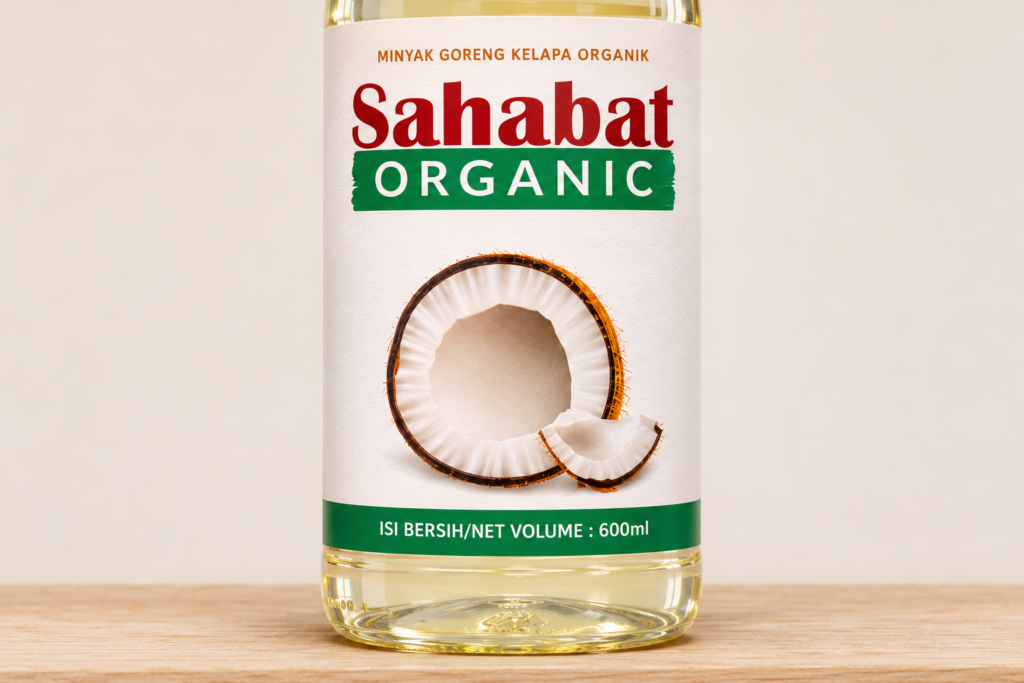
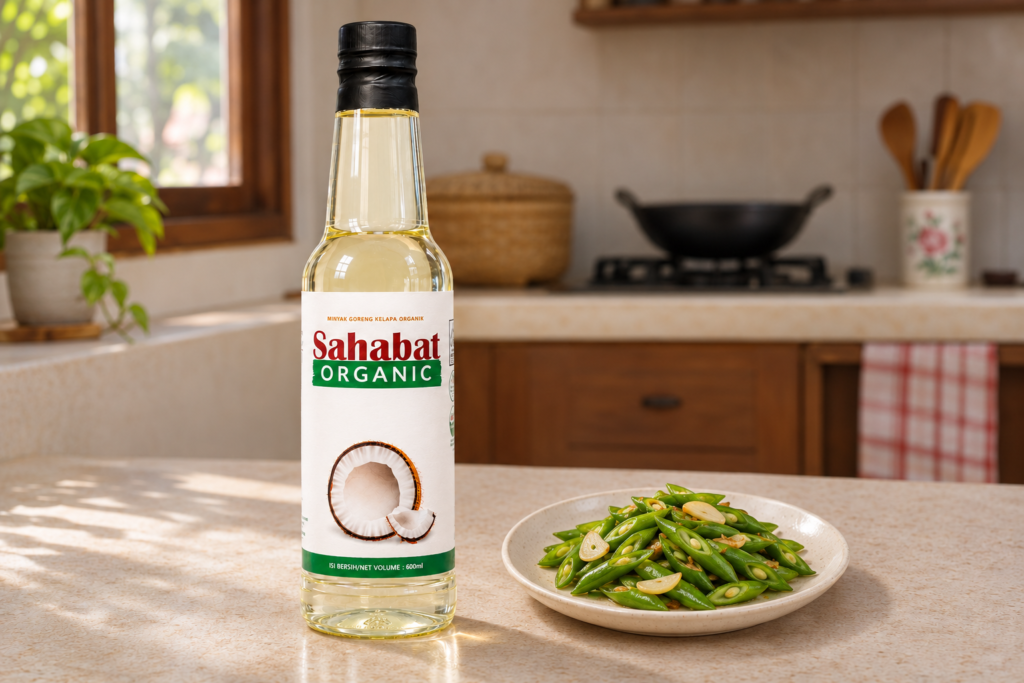
Sahabat Organic Coconut Cooking Oil comes in a 600 ml bottle. Look for Minyak Goreng Kelapa Organik, the green Organic panel, and the 600 ml marking on the front label.
For a first try, make a dish you already know well. Sauté sliced garlic and green beans using your usual pan, seasoning, and amount of oil. Taste the beans while they’re warm. Can you still pick out the garlic? Does the amount of oil coat the beans the way you like? That familiar dish gives you a practical way to decide whether the bottle belongs in your kitchen.
View Sahabat Organic Coconut Cooking Oil 600 ml on Shopee Indonesia
Masak Lebih Sehat dengan Minyak Goreng Kelapa Sahabat
100% minyak kelapa murni untuk rumah tangga, usaha, dan industri. Belanja online atau hubungi tim kami.