When comparing coconut oil vs palm oil, the most useful question is what you want the oil to do. Are you looking for a coconut aroma, a neutral cooking ingredient, or a fat with a particular melting behavior?
Coconut oil can offer practical advantages when you want a distinctive coconut flavor, a fat that melts readily as it warms, or a coconut-based alternative for product development. These advantages depend on the type of coconut oil and the recipe. They do not mean coconut oil is automatically healthier, cheaper, or better for every frying application.
For home cooks, cafés, and food businesses, choosing the right oil starts with matching its characteristics to the finished food.
Table of Contents
First, Know Which Oils You Are Comparing
Coconut oil is obtained from coconut meat. The two main types relevant to kitchens are virgin coconut oil and refined coconut oil.
Virgin coconut oil generally retains a coconut aroma. Refined coconut oil undergoes processing that reduces its color and odor, giving it a more neutral profile. For more detail, read Sahabat’s introduction to RBD coconut oil.
Palm oil comes from the flesh of the oil palm fruit. Palm kernel oil comes from its kernel and is a different ingredient. Palm oil can also be processed into different fractions, including liquid cooking oil. Comparing coconut oil with “palm oil” without identifying the actual product can therefore be misleading. Harvard Health
A useful comparison should name the products: for example, refined coconut cooking oil and refined palm olein intended for frying.
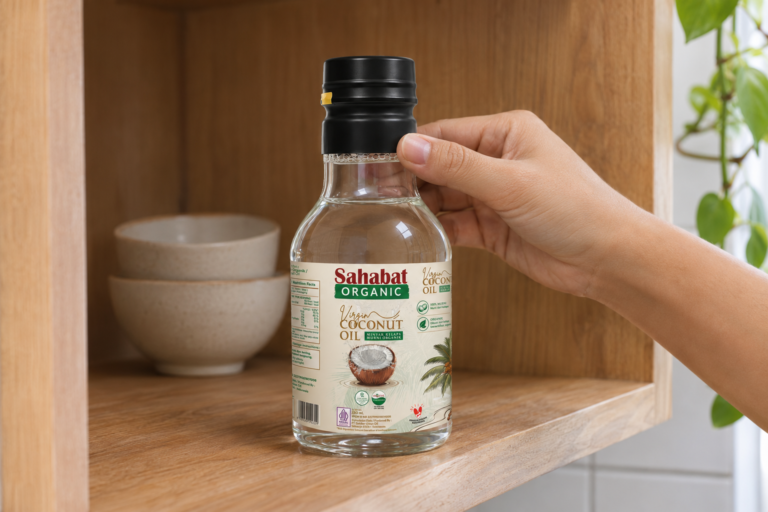
1. Virgin Coconut Oil Can Add a Distinctive Coconut Aroma
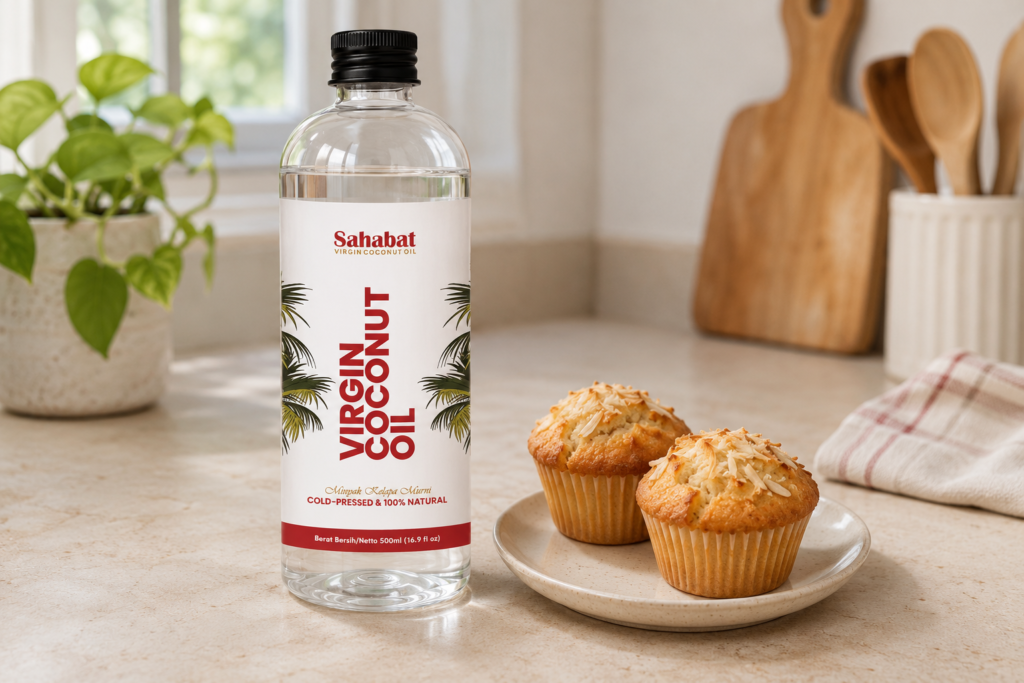
One clear reason to choose virgin coconut oil over a neutral refined palm cooking oil is flavor.
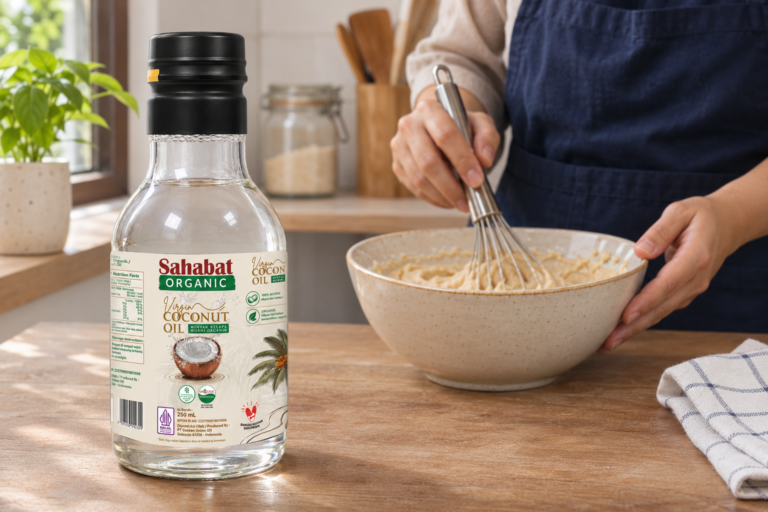
A coconut aroma can be desirable in a coconut muffin, a spiced vegetable dish, or another recipe built around coconut ingredients. In these cases, the oil contributes to the food’s character as well as serving as a cooking fat. CBI identifies virgin coconut oil’s distinctive scent as an important feature that differentiates it from competing oils. CBI
This advantage is recipe-specific. A noticeable coconut aroma may suit one dish and distract from another.
Before changing your usual oil, prepare a small portion and assess the finished food. Taste it at the temperature at which you normally serve it, rather than judging the oil only from its aroma in the bottle.
What If You Prefer a Neutral Flavor?
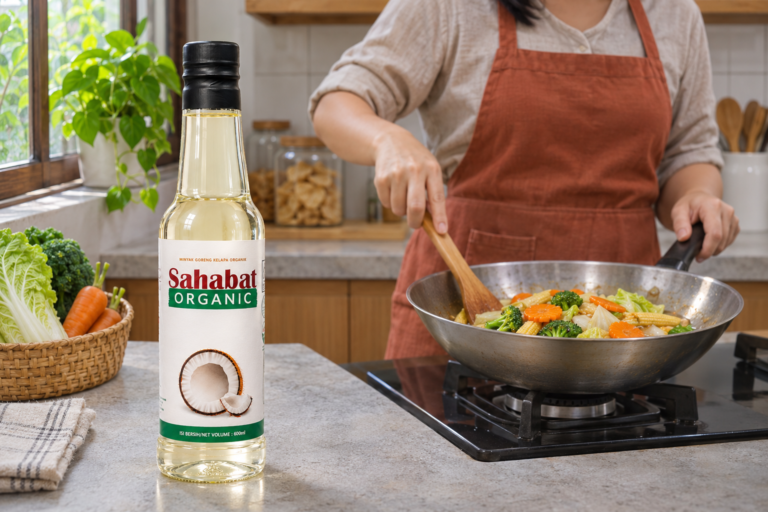
Choose a refined coconut oil when you want to use coconut-derived oil with less coconut aroma. Sahabat’s product information describes its RBD coconut oil as having a neutral taste after refining, bleaching, and deodorizing. sahabat.co
Neutral flavor is not exclusive to coconut oil; refined palm cooking oil can serve that purpose too. The benefit is having a coconut-based option when that ingredient choice matters to your recipe or purchasing brief.
2. Coconut Oil Offers a Distinct Melting Behavior
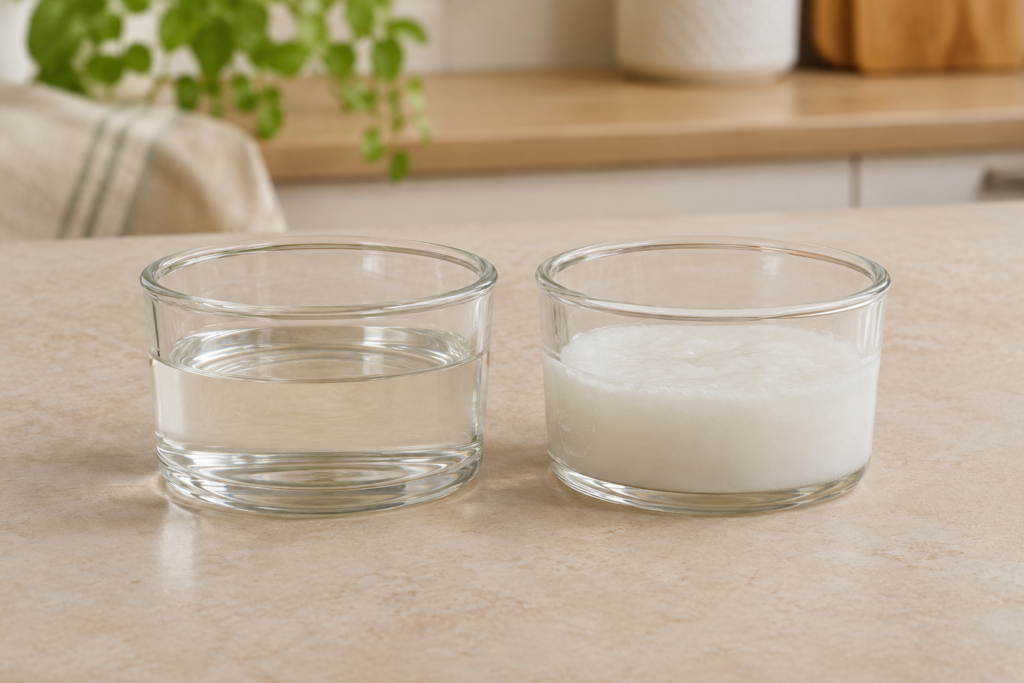
Coconut oil’s transition between firm and liquid states can be useful when developing foods whose texture changes with temperature.
The Food Chemicals Codex describes unhydrogenated coconut oil as becoming fairly firm at approximately 21°C or below and liquid at approximately 27°C. This relatively narrow melting range helps explain why the same oil may be solid in an air-conditioned kitchen and liquid in a warmer room. doi.usp.org
For a product developer, that behavior is a characteristic worth testing. It may be useful when a recipe needs a fat that firms when cooled and melts readily when warmed.
However, it is not a universal replacement for palm-based shortening or other formulated fats. Those products may be designed for a different working temperature or texture.
For example, a filling that performs well in a cool room may become too soft on a warm display counter. Test the finished product under actual storage and serving conditions before changing the formula.
3. Coconut Oil Provides an Alternative for Coconut-Based Product Development
A business may choose coconut oil because coconut is part of its product concept or ingredient specification.
For a coconut-focused bakery item, snack, or dessert, using coconut oil can support a consistent ingredient story. CBI identifies RBD coconut oil as a potential substitute for palm oil in some market applications, while emphasizing competition with other vegetable oils. CBI
The practical opportunity is to develop and test a coconut-based version of a product.
That does not establish that the finished product is healthier or more sustainable. Those are separate claims requiring appropriate evidence.
If you intend to describe a product as palm-oil-free, check the complete ingredient list and supplier information. Other ingredients, such as margarine, fillings, or coatings, may still contain palm-derived fats.
Coconut Oil vs Palm Oil: A Practical Comparison
| Your priority | How coconut oil may help | What to check |
|---|---|---|
| A noticeable coconut aroma | Virgin coconut oil can contribute coconut character | Whether the flavor suits the finished dish |
| A neutral coconut-derived oil | Refined coconut oil offers a less aromatic option | Product specifications and cooking instructions |
| A fat that firms when cooled | Coconut oil has a distinct temperature-dependent consistency | Texture at storage, preparation, and serving temperatures |
| A coconut-based product concept | Coconut oil provides an alternative ingredient source | The complete formula and supplier documentation |
| Routine frying performance | A suitable refined coconut oil can be evaluated in your process | Actual performance against your current frying oil |
The strongest reason to switch is a measurable improvement in your particular food or production process.
Is Coconut Oil Better Than Palm Oil for Frying?
A general comparison cannot establish which oil will perform better in every fryer.
Start by distinguishing refined coconut cooking oil from virgin coconut oil. Their processing and characteristics differ, so advice for one should not automatically be applied to the other.
Then compare the exact products using the same food, equipment, temperature, and cooking schedule.
For a useful trial:
- Use the same portion size and food preparation method.
- Keep the frying conditions consistent.
- Evaluate flavor, color, and texture at the usual serving time.
- Record oil consumption and the amount of acceptable finished food.
- Follow an appropriate oil-quality monitoring and replacement procedure.
Avoid promising a fixed number of reuses without evidence for the specific operating conditions. Similarly, claims such as “less oil absorption” or “lower cost per serving” should come from a controlled comparison.
Is Coconut Oil Healthier Than Palm Oil?
Coconut oil should not be presented as automatically healthier than palm oil.
Both contain substantial saturated fat, and coconut oil generally contains a higher proportion. Harvard’s Nutrition Source also explains that research on specially formulated MCT oil should not be treated as evidence for ordinary coconut oil. The Nutrition Source
The practical advantages discussed here concern flavor, ingredient choice, and food preparation. They are not evidence that coconut oil lowers cholesterol or protects heart health.
For a credible product comparison, keep culinary performance separate from nutritional claims.
How to Choose Coconut Oil for Your Kitchen or Business
Begin with the application.
If you want a coconut aroma, explore a food-grade virgin coconut oil. If you need a more neutral coconut-based cooking ingredient, consider refined coconut oil and check its intended uses.
Before placing a larger order, confirm:
- The product type and ingredient information.
- The supplier’s recommended applications.
- Available packaging and handling requirements.
- Storage instructions and date information.
- Specifications relevant to your production process.
Run a small trial before replacing an established ingredient across your menu.
Frequently Asked Questions
Will refined coconut oil make every dish taste like coconut?
Refining and deodorizing reduce the coconut aroma. Choose the product according to the flavor you want, and test it in the finished recipe.
Is coconut oil the same as palm kernel oil?
No. They come from different plants. Palm kernel oil is also different from palm oil extracted from the fruit’s flesh. Harvard Health
Does clear oil mean better quality?
Clarity alone cannot establish quality or frying performance. Coconut oil’s appearance changes with temperature, so evaluate the product using its specifications, condition, and intended application.
Can a bakery replace palm-based shortening with coconut oil directly?
Do not assume a direct replacement will give the same result. Test the recipe’s texture, handling, and performance at the intended serving temperature.
Find the Right Coconut Oil with Sahabat
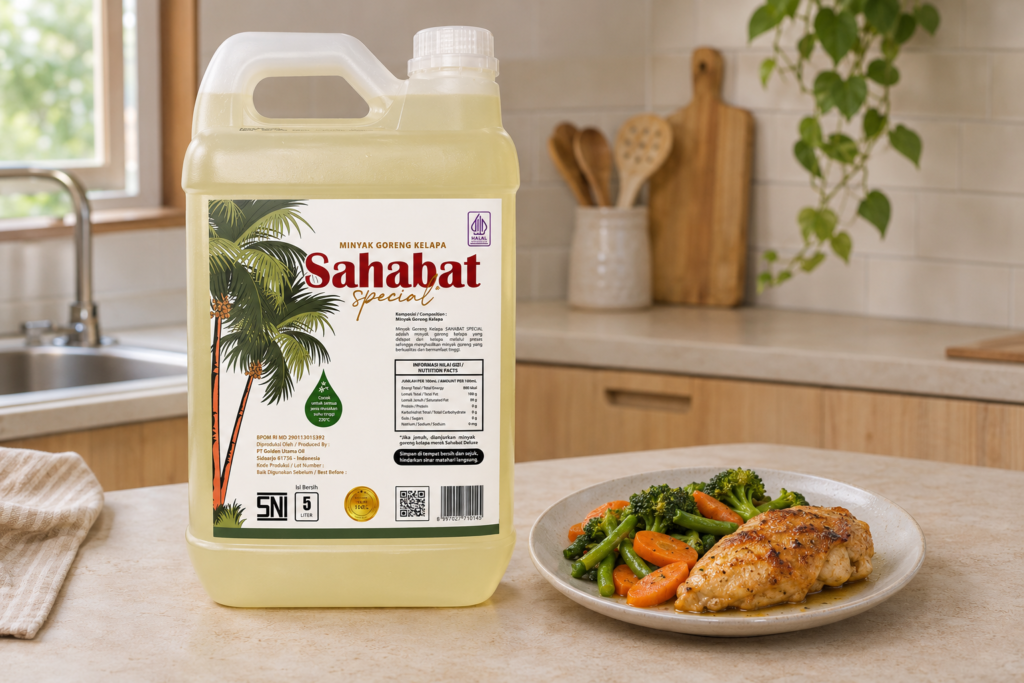
Sahabat offers coconut cooking oil and virgin coconut oil, with retail and larger packaging options for households, HoReCa, and industry. Explore the Sahabat coconut product range to identify an appropriate starting point. Minyak Goreng Kelapa Sahabat
Tell the team what you prepare, which oil you currently use, and your estimated requirements. This helps make the product discussion relevant to your kitchen.
Ask Sahabat About Coconut Oil for Your Kitchen or Business
Masak Lebih Sehat dengan Minyak Goreng Kelapa Sahabat
100% minyak kelapa murni untuk rumah tangga, usaha, dan industri. Belanja online atau hubungi tim kami.