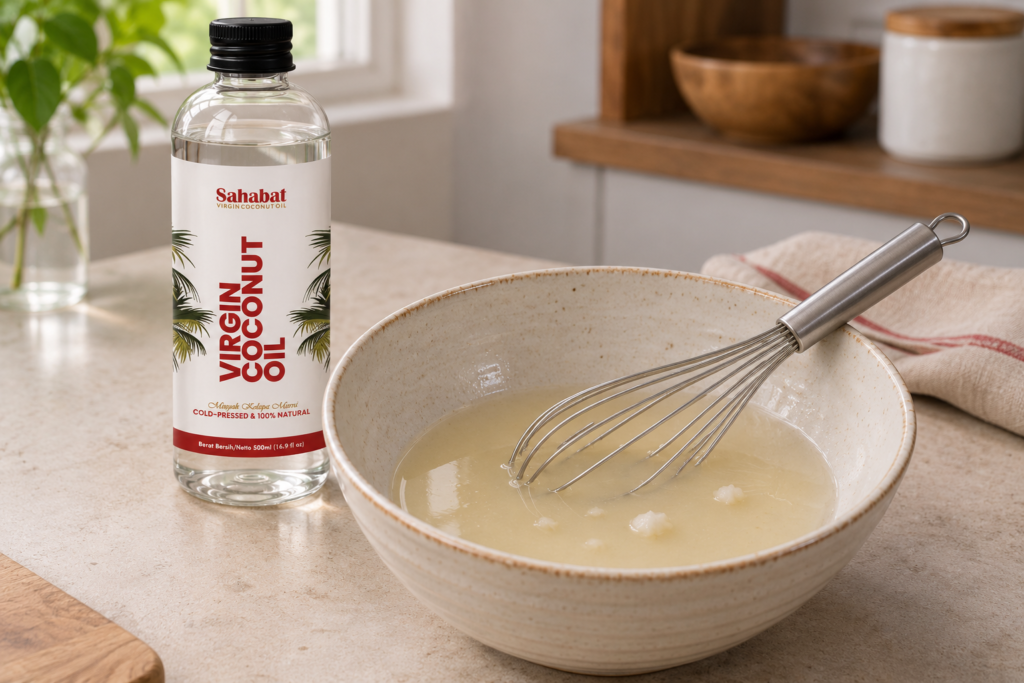
Coconut oil lumps in batter often appear when melted oil cools and begins to solidify after touching cold ingredients. Refrigerated eggs, milk, or yogurt can cool the oil enough to create small white flecks or waxy pieces. The next step depends on when they appear. Check the wet mixture before adding flour, and follow the recipe’s mixing instructions once the batter is combined. Cookie and Kate documents this problem in its chocolate chip muffin recipe. Cookie and Kate
Imagine preparing muffins with coconut oil that pours smoothly from the bottle. You add chilled yogurt, whisk briefly, and notice white specks around the bowl. Understanding what changed helps you decide whether to warm the mixture gently or continue with the recipe.
Table of Contents
Why Melted Coconut Oil Becomes Solid Again
Coconut oil responds to the temperature of its surroundings. It can be clear and pourable in a warm kitchen, then become cloudy or firm as it cools. NOW Foods describes white clumps and changes between liquid and solid coconut oil in its product guidance. NOW Foods
The same change can happen inside a mixing bowl. Melting the oil prepares it for pouring, but the ingredients you add next influence its consistency.
Think about the whole mixture. A small portion of melted oil mixed into a much larger quantity of cold ingredients can cool quickly. A cool bowl can also contribute to the temperature change.
For a recipe that requires liquid coconut oil, check its consistency immediately before mixing. Oil that was clear when measured may have started setting while you prepared the other ingredients.
Check When the Lumps Appeared
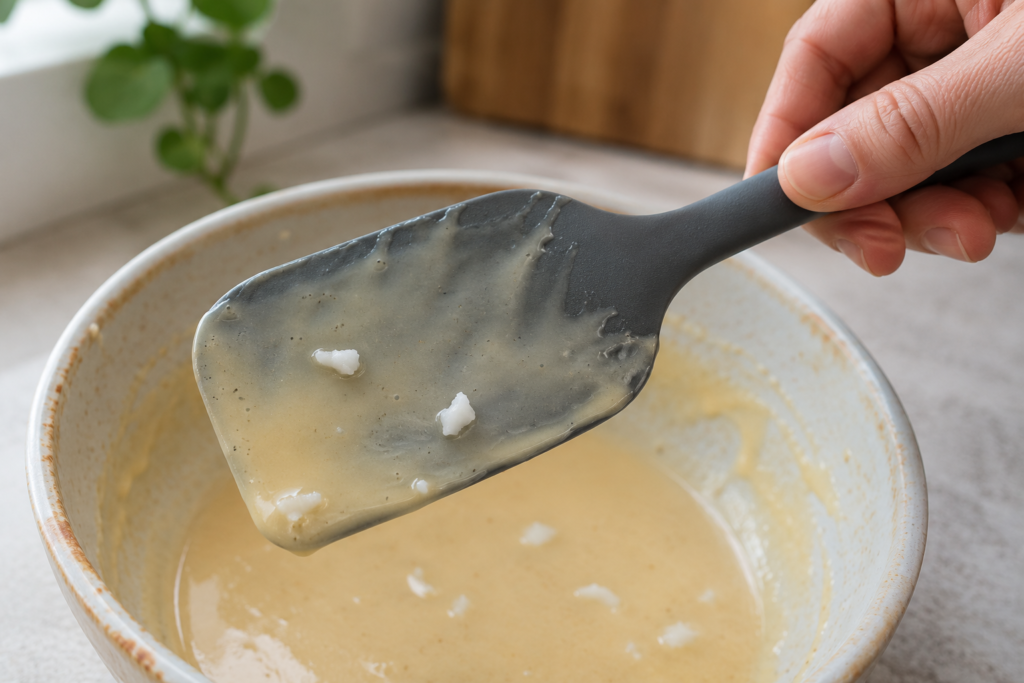
Before changing anything, identify the step at which the mixture became uneven.
| When you notice the lumps | What to check | Your next step |
|---|---|---|
| Before the oil enters the bowl | Does the measured oil already contain white or firm pieces? | If the recipe calls for melted oil, gently melt the remaining pieces. |
| Immediately after adding a chilled ingredient | Did white, waxy flecks appear as the ingredients touched? | Check the recipe’s guidance for gently warming the wet mixture. |
| After adding flour | Are the lumps pale fat pieces, dry flour pockets, or pieces of another ingredient? | Follow the recipe’s mixing cues and avoid prolonged beating. |
| During a recipe that calls for softened or chilled fat | Is the fat behaving as the method intends? | Keep the consistency specified by the recipe. |
Appearance provides a clue, but the sequence matters. Flecks that appear immediately after cold yogurt is added suggest a different problem from dry flour pockets left after folding.
How to Handle Coconut Oil Lumps Before Adding Flour
The wet-ingredient stage gives you an opportunity to check the oil’s consistency before the batter comes together.
If your recipe includes instructions for oil that solidifies during mixing, follow those directions. In Cookie and Kate’s chocolate chip muffins, the author advises gentle warming of the wet mixture if cold ingredients cause the oil to set, before combining it with the dry ingredients. Cookie and Kate
For recipes that allow gentle warming, work gradually.
- Pause before adding the flour.
- Use a bowl suitable for the warming method.
- Apply gentle warmth briefly, then stir and inspect the mixture.
- Stop once the solid oil has softened enough to incorporate.
- Continue with the recipe’s mixing sequence.
The aim is to restore the consistency required for mixing. Avoid heating the mixture until it steams or the eggs begin to cook. Warming time depends on the quantity, bowl, and equipment, so use the recipe’s directions and check frequently.
What If the Flour Is Already Mixed In?
Once flour enters the bowl, repeated whisking can affect the texture of the finished bake. For muffins, follow the recipe’s stopping point even if the batter looks slightly uneven. Cookie and Kate specifically cautions against overmixing and allows some lumps in its muffin batter. Cookie and Kate
Use a spatula to check the bottom and sides for unincorporated ingredients. If you find a dry flour pocket, fold it in gently. Avoid adding extra oil or milk simply to make the batter look smoother, because that changes the recipe’s proportions.
If large pieces of solid fat remain, consult the recipe author’s troubleshooting advice. The effect will depend on the size and distribution of the pieces and the type of bake. A muffin batter, creamed cake mixture, and pastry dough each need a different texture.
How to Prevent Coconut Oil Lumps in Batter
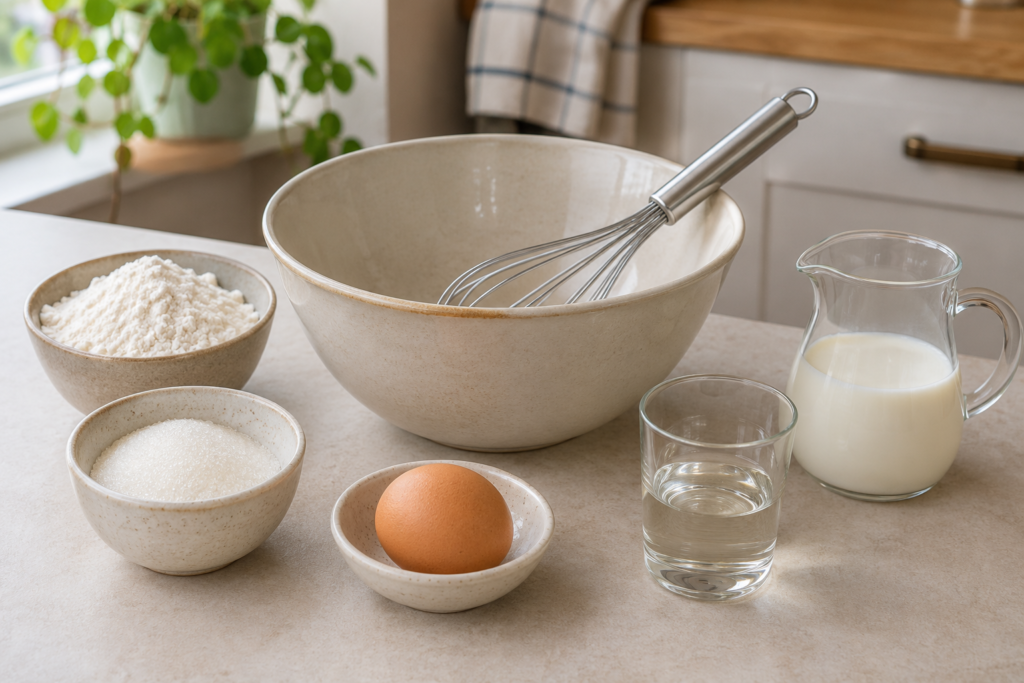
Prepare the ingredients before melting the oil
Read the ingredient list and method together. Note which ingredients should be chilled, softened, melted, or at room temperature.
Measure the remaining ingredients and prepare the baking pan before melting the oil. This reduces the time the measured oil spends cooling on the counter.
Check consistency immediately before mixing
For a recipe that specifies melted coconut oil, look for a freely flowing liquid. Stir the measured portion and check for firm pieces at the bottom.
For softened coconut oil, look for a texture that yields to pressure while retaining some structure. King Arthur Baking explains that solid coconut oil can be creamed with sugar, making its physical state relevant to the mixing method. King Arthur Baking
Follow the specified ingredient temperatures
Pay attention when a recipe calls for room-temperature eggs or other ingredients. Prepare only the quantities needed for the batch and follow the ingredients’ storage instructions.
If you work in an air-conditioned kitchen, check the oil again after gathering your ingredients. The temperature at the mixing station may differ from where you store the bottle.
When troubleshooting coconut oil lumps in batter, first identify whether they appeared before or after you added the flour.
Keep the recipe’s mixing order
Add ingredients in the sequence given by the author. Check the wet mixture before folding in flour when the recipe uses separate wet and dry bowls.
If you are adapting a butter recipe, consider the role of the original fat as well as its quantity. Sahabat’s guide explains factors to consider when making that substitution. Read about using coconut oil instead of butter in baking.
Does Virgin or Refined Coconut Oil Make a Difference?
Choose between virgin and refined coconut oil according to the flavor and product requirements of your recipe. Virgin coconut oil generally contributes coconut aroma, while refined coconut oil typically has a more neutral flavor. Both require attention to consistency during preparation. King Arthur Baking discusses these flavor differences and the importance of following a recipe developed for a particular fat. King Arthur Baking
When comparing products, read the label and confirm their intended use. For more background on VCO, see Sahabat’s introduction. Learn about virgin coconut oil.
A Practical Check for Café and Bakery Trials
If coconut oil lumps appear repeatedly in the same recipe, keep a short record for the next trial.
| Record | What to write down |
|---|---|
| Recipe and batch size | Recipe version and number of portions |
| Oil quantity | Weight or volume used |
| Oil consistency | Liquid, partly solid, or softened before mixing |
| Other ingredients | Which ingredients came directly from refrigeration |
| Mixing sequence | The step at which white flecks first appeared |
| Finished result | Texture, flavor, and any visible unevenness after cooling |
Change one preparation variable at a time so you can understand its effect. For example, repeat the same formula while following the recipe’s specified ingredient temperatures more closely.
Record the result after baking and cooling. This gives the next baker a repeatable method and helps you assess the product in your actual recipe.
Frequently Asked Questions
Why does coconut oil turn white when I add it to batter?
The oil may be cooling and beginning to solidify. This is especially plausible when the change happens immediately after contact with chilled ingredients. Check when the white pieces appeared and what the recipe expects at that stage.
Should coconut oil always be melted before baking?
Use the consistency specified in the recipe. Some methods call for melted oil, while others rely on softened or solid fat. Check both the ingredient list and the mixing instructions.
Can I add more oil to get rid of the lumps?
Keep the recipe’s measured quantity. Extra oil changes the proportions. First check whether the existing oil has solidified and whether the recipe provides instructions for handling it.
Will every white lump disappear during baking?
Coconut fat melts as it warms, but a white lump may also contain flour or another ingredient. Large, unevenly distributed pieces can affect how ingredients combine. Identify the likely cause before deciding what to do.
Choose Sahabat VCO for Your Next Baking Trial
Planning to try virgin coconut oil in muffins, banana bread, or another recipe? Start with a small batch and record the amount used, the mixing method, and the finished texture.
Sahabat lists VCO in 250 ml and 500 ml bottles, alongside a 100 ml spray format. Ask the team which package suits your intended use and how to handle it for your recipe. Minyak Goreng Kelapa Sahabat
Discuss your recipe, preferred package size, and purchase quantity with Sahabat.
Masak Lebih Sehat dengan Minyak Goreng Kelapa Sahabat
100% minyak kelapa murni untuk rumah tangga, usaha, dan industri. Belanja online atau hubungi tim kami.