Virgin coconut oil is easy to recognize on a product label, but its name does not tell you everything about what is inside the bottle. Where does it come from? Why does it sometimes turn white? And does “virgin” mean it can only be used without cooking?
These five facts about virgin coconut oil explain its raw material, production methods, aroma, temperature-related changes, and culinary uses. Understanding them can help you choose VCO for a practical reason—whether you are trying a new recipe at home or sourcing ingredients for your business.
Table of Contents
1. VCO Comes from Coconut Meat, Not Coconut Water
A clear bottle of VCO may look similar to other transparent liquids, but its source is the white flesh of a mature coconut.
Some production methods first extract coconut milk from the flesh, then separate the oil. Coconut water, the liquid naturally found inside the fruit, is a different coconut product.
The distinction matters: pressing grated coconut produces coconut milk, not finished VCO. Further separation and processing are needed to recover the oil. The Pacific Community’s VCO processing manual describes these preparation and extraction stages. service-public.pf
When looking at product descriptions, distinguish between these three ingredients:
| Ingredient | What it is |
|---|---|
| Coconut meat | The white kernel from which coconut oil is obtained |
| Coconut milk | A liquid extracted from prepared coconut meat |
| Virgin coconut oil | Oil recovered through an appropriate VCO production process |
For a fuller introduction, read Sahabat’s guide to what VCO is and how it is produced.
2. VCO Can Be Produced Using Different Methods
Two products labeled virgin coconut oil may follow different production routes.
The Pacific Community’s processing manual describes fresh-dry methods, which involve preparing and drying fresh coconut meat before extraction, and fresh-wet methods, which separate oil from coconut milk. Techniques include pressing, centrifugation, and controlled fermentation, depending on the route. service-public.pf
This means the word “virgin” alone does not identify every processing step.
If you specifically want a cold-pressed product, look for a clear manufacturer statement. Do not assume that all VCO is cold-pressed simply because the front label says “virgin coconut oil.”
For business sourcing, useful questions include:
- What production method does the supplier declare?
- What finished-product specifications are available?
- Can the supplier provide documentation supporting its product claims?
These questions help you compare actual products rather than relying on general descriptions such as “premium” or “natural.”
3. Its Coconut Aroma Can Influence Your Recipe
VCO generally retains a characteristic coconut aroma. Refined coconut oil usually has a more neutral flavor, making the two options useful for different recipe goals. nutiva.com
That difference is worth considering before you buy.
For example, coconut character may complement a banana muffin, coconut-based sauce, or tropical granola. In a dish with delicate flavors, you might prefer a more neutral oil.
Neither choice automatically makes the finished food better. The right option depends on what you want people to taste.
Try a Simple Flavor Comparison
Prepare two small portions of the same suitable recipe, using VCO in one and refined coconut oil in the other. Keep the oil quantity and other ingredients consistent.
Compare:
- How noticeable the coconut aroma is.
- Whether it complements the other ingredients.
- Which version best matches your intended menu.
For more information about refined coconut oil, explore RBDCNO and its differences from VCO.
4. VCO Can Turn White or Solid When It Gets Cooler
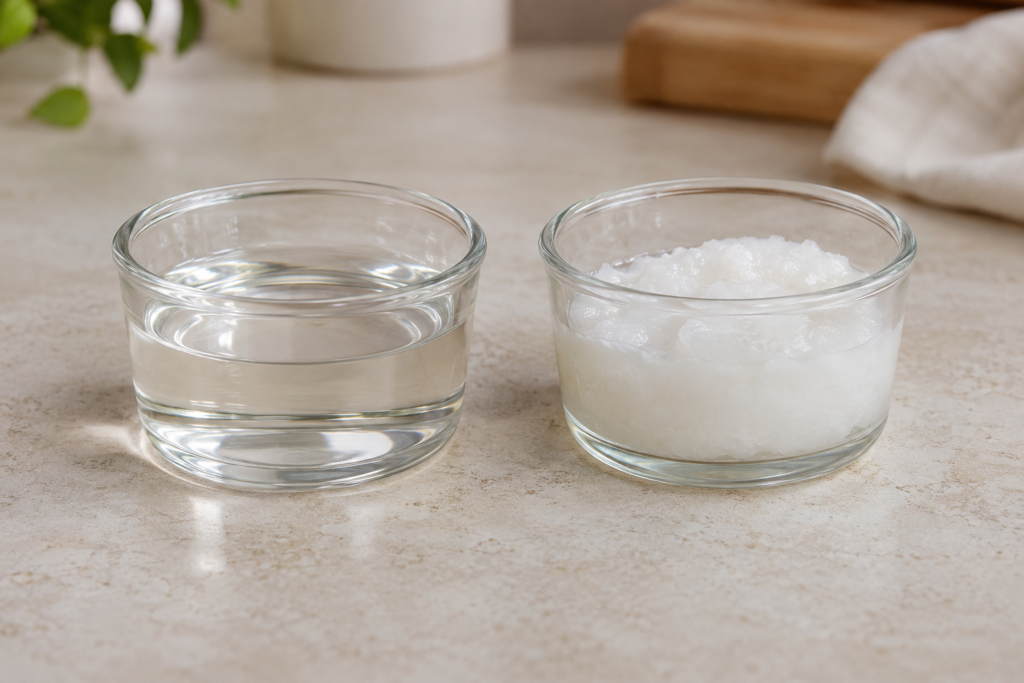
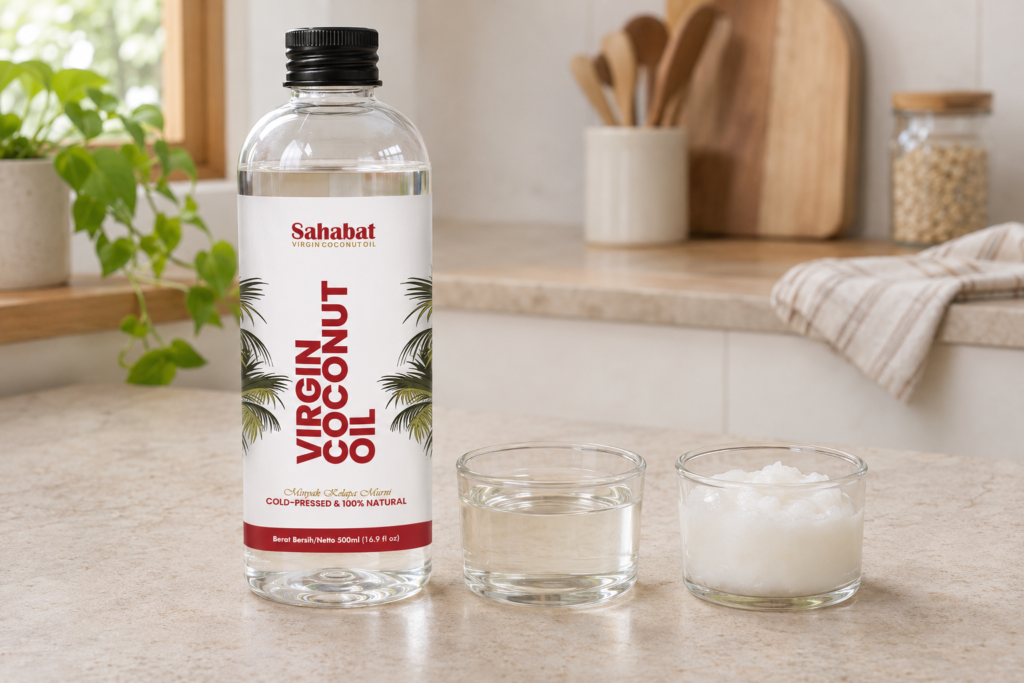
Illustration of coconut oil in liquid and solid states. A temperature-related change alone does not establish spoilage.A temperature-related change from clear liquid to a white, firmer consistency does not by itself mean VCO has spoiled.
Ordinary coconut oil becomes more fluid in warmer conditions and firmer in cooler surroundings. Nutiva’s product guidance also identifies this liquid-to-solid change as normal. Nutiva
This helps explain why the same bottle may look different in a warm kitchen and an air-conditioned room.
Appearance alone, however, cannot establish freshness or purity. Check the product’s date information, packaging condition, and storage instructions rather than using clarity as your only test.
For a closer explanation, read why coconut oil solidifies.
5. VCO Has Culinary Uses Beyond Taking It Straight
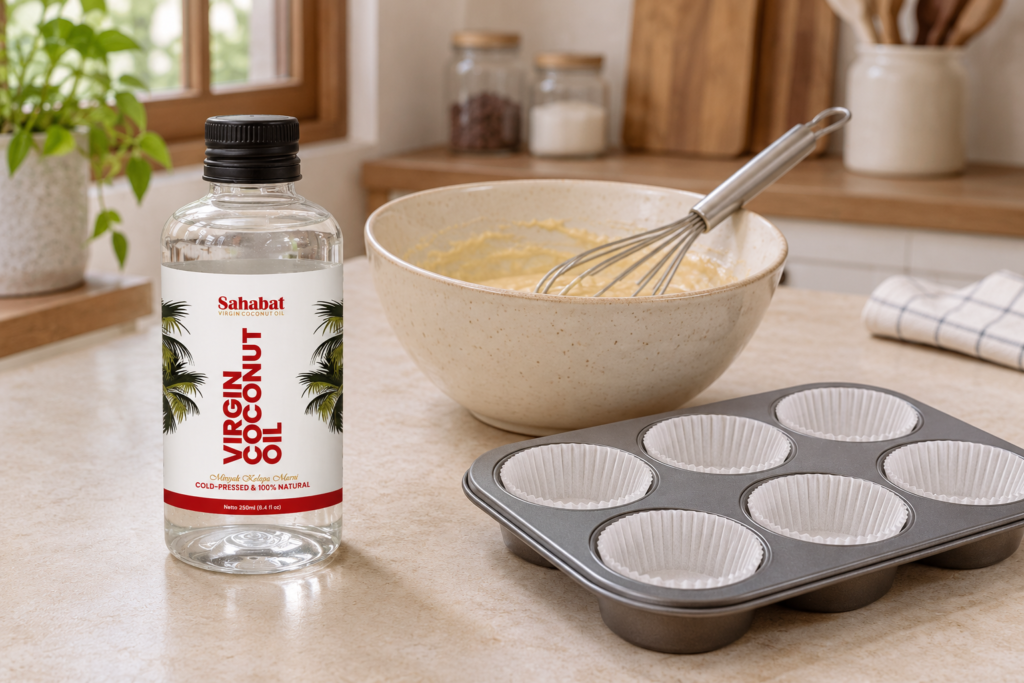
VCO does not have to be consumed directly from a spoon. Food-grade products can be used in suitable recipes.
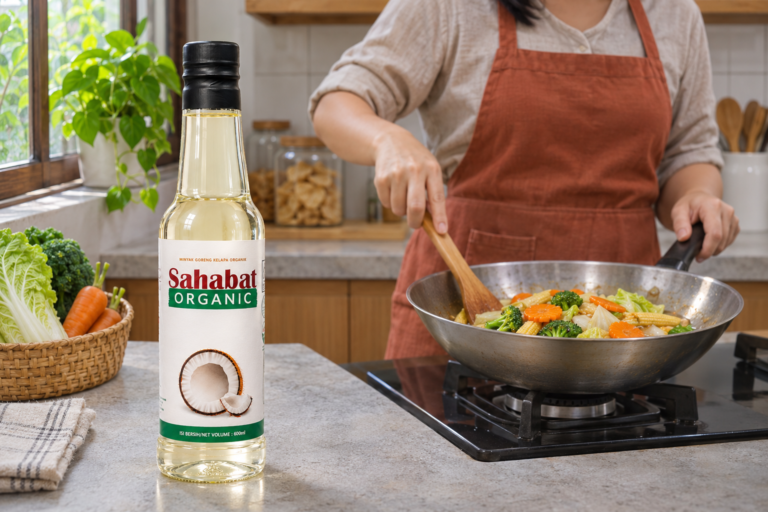
For example, Nutiva lists baking and medium-heat sautéing for its virgin coconut oil. These are instructions for that specific product, so check the guidance supplied with the VCO you purchase. Nutiva
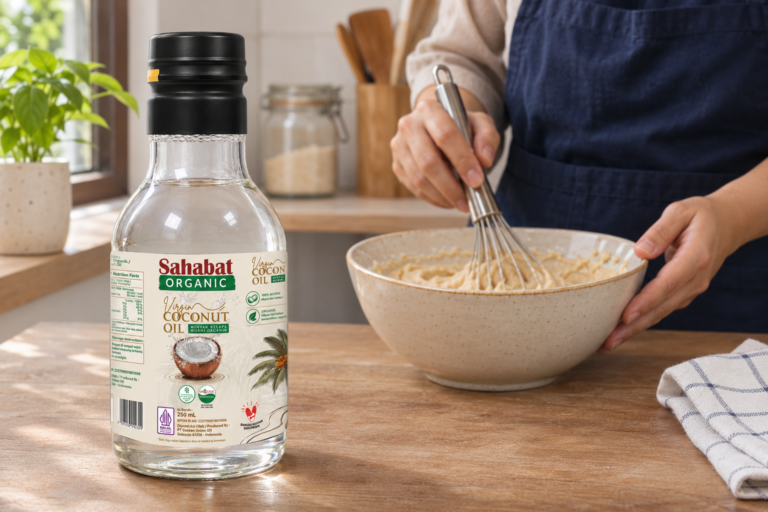
Start with a recipe written for coconut oil and follow its specified quantity and consistency. If it calls for melted oil, prepare it accordingly before mixing.
For a first trial, avoid changing the oil, sweetener, and cooking method together. One change at a time makes the result easier to evaluate.
What These Facts About Virgin Coconut Oil Mean for Buyers
The most useful product is one that suits your intended use and comes with clear information.
Before choosing VCO, review the following:
| What to check | Why it matters |
|---|---|
| Product identity and ingredients | Confirms what you are buying |
| Intended use | Helps you choose a product appropriate for food preparation |
| Stated production method | Clarifies specific claims such as cold-pressed |
| Cooking and storage instructions | Guides how you handle the actual product |
| Packaging condition and date information | Helps you assess the pack before purchase |
| Pack size | Lets you match the purchase to your expected usage |
For cafés, retailers, and food manufacturers, request available specifications and relevant supporting documents before placing a larger order.
Frequently Asked Questions About VCO
What Does VCO Stand For?
VCO stands for virgin coconut oil.
Is VCO the Same as Coconut Milk?
No. Coconut milk can be an intermediate ingredient in some VCO production methods, but it is not the finished oil.
Does Clear VCO Mean Better Quality?
Clarity alone cannot establish quality. Temperature can change the oil’s appearance, and a visual check cannot replace product specifications or appropriate testing.
Should I Choose VCO or Refined Coconut Oil?
Understanding these five facts about virgin coconut oil can help you ask better questions before buying. Looking for VCO for your home kitchen, café, retail business, or product development? Start by checking the product’s intended use, packaging size, and available specifications.
Explore Sahabat Virgin Coconut Oil
Looking for VCO for your home kitchen, café, retail business, or product development?
Contact Sahabat for available VCO packaging sizes, product information, specifications, and pricing. Share your intended application and estimated quantity so our team can help you review the available options.
Chat with Sahabat About VCO on WhatsApp →
Masak Lebih Sehat dengan Minyak Goreng Kelapa Sahabat
100% minyak kelapa murni untuk rumah tangga, usaha, dan industri. Belanja online atau hubungi tim kami.