Virgin coconut oil (VCO) is oil obtained from fresh, mature coconut meat through mechanical or natural processes, without conventional chemical refining, bleaching, or deodorization. It can be produced through several methods, so the word “virgin” does not describe one specific extraction technique.
For buyers, understanding these methods helps explain the information on a bottle: what “cold-pressed” means, why some producers use centrifugation, and which questions to ask before choosing a product.
This guide introduces the main production routes and explains what they mean when buying VCO for your kitchen or business.
Table of Contents
Where Does Virgin Coconut Oil Come From?
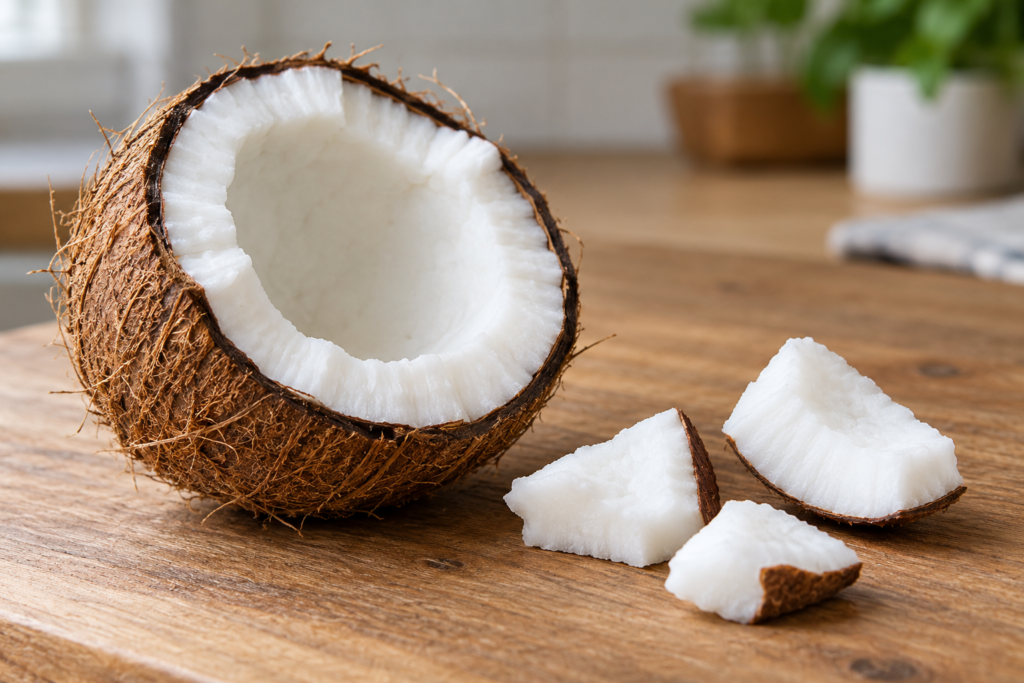
The raw material for VCO is the white flesh, or kernel, of a mature coconut.
Coconut water—the liquid naturally found inside the fruit—is not the raw material from which coconut oil is extracted. Some production methods instead use coconut milk, which is obtained by pressing prepared coconut flesh.
The Philippine Coconut Authority describes two broad production routes: fresh-dry, which extracts oil from prepared and dried fresh coconut meat, and fresh-wet, which recovers oil from coconut milk. pca.gov.ph
This distinction is useful because two bottles labeled VCO may have followed different production routes.
Virgin Coconut Oil Production Methods at a Glance
| Production route or method | Basic process | What buyers should understand |
|---|---|---|
| Fresh-dry extraction | Fresh coconut meat is grated or otherwise reduced in size, dried under controlled conditions, and processed to extract oil | “Fresh-dry” describes the preparation route, not automatically a cold-pressed claim |
| Fresh-wet centrifugation | Coconut milk is extracted, then centrifugal force separates its components | Centrifugation is a separation technique |
| Fresh-wet fermentation | Controlled fermentation helps separate oil from coconut milk | Processing conditions and subsequent moisture removal matter |
| Controlled heating in a fresh-wet process | Heat helps break the coconut-milk emulsion and release oil | The use of heat must be considered within the applicable product definition and process controls |
These routes are described in the Processing Manual for Virgin Coconut Oil, its Products and By-products for Pacific Island Countries and Territories. They are general production methods, not a description of every brand’s manufacturing process. service-public.pf
How Is Virgin Coconut Oil Made?
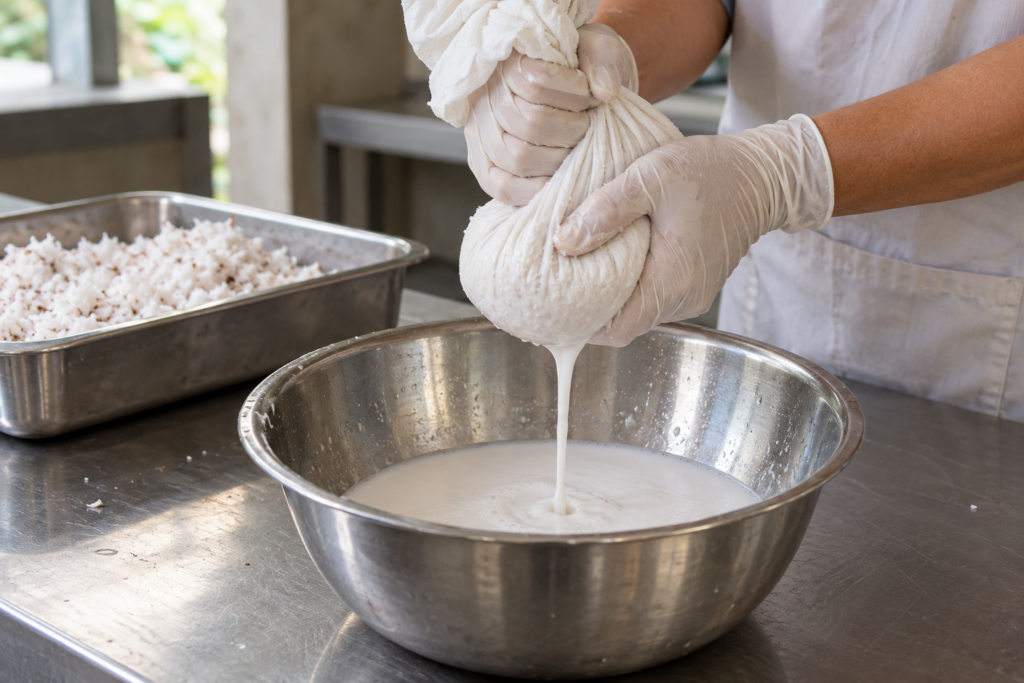
Although equipment and methods differ, production involves selecting suitable coconuts, preparing the kernel, extracting the oil, and handling it carefully before packaging.
1. Selecting and preparing the coconuts
Mature coconuts are selected and inspected before processing. The shell is opened, and the kernel is removed and prepared for the chosen extraction route.
The Coconut Development Board highlights coconut maturity, sanitation, and clean processing equipment as important production considerations. coconutboard.gov.in
2. Extracting the oil
In a fresh-dry process, prepared coconut meat undergoes controlled drying before extraction. In a fresh-wet process, the producer first obtains coconut milk, then separates the oil.
The equipment can include presses or centrifuges, depending on the production route. The process name alone is not enough to describe the finished oil’s quality.
3. Managing moisture and filtering
After extraction, the oil may require moisture reduction and filtration. These steps help prepare it for packaging and storage.
The Pacific processing manual treats oil drying, filtration, packaging, and storage as distinct parts of production. service-public.pf
4. Packaging and identifying the product
Clean, dry packaging is important. The Coconut Development Board specifically emphasizes controlling water in the oil and keeping process containers and packaging materials clean and thoroughly dry. coconutboard.gov.in
For a buyer, the practical result should be a properly sealed product with clear identification, date information, and storage instructions.
Is All Virgin Coconut Oil Cold-Pressed?
No. Do not assume that “virgin” and “cold-pressed” mean the same thing.
The Codex text on vegetable oils defines these terms separately. Its description of virgin oils allows mechanical procedures and the application of heat, provided the nature of the oil is not altered. Cold-pressed oils are obtained through mechanical procedures without applying heat. fao.org
When comparing products, ask two separate questions:
- Is it virgin coconut oil? Check the product identity and supporting specification.
- Is it cold-pressed? Check the producer’s stated extraction method.
A bottle labeled “virgin coconut oil” should not automatically be described as cold-pressed in a product listing or article.
Likewise, a centrifuge process should not be renamed cold pressing simply because it separates oil without a conventional oil press.
How Does VCO Differ from Refined Coconut Oil?
VCO and refined coconut oil both come from coconuts, but their processing and flavor profiles can differ.
VCO generally retains a characteristic coconut aroma. Refined coconut oil undergoes further processing, including deodorization, and generally has a more neutral flavor. Nutiva
| Consideration | Virgin coconut oil | Refined coconut oil |
|---|---|---|
| Processing information | Look for the specific extraction method | Look for the refining description and product specification |
| Typical flavor direction | Coconut character | More neutral |
| Recipe selection | Useful to evaluate when coconut aroma is welcome | Useful to evaluate when other ingredients should lead |
| Buying decision | Match the actual product to your intended use | Match the actual product to your intended use |
Neither name guarantees that a product will suit every recipe.
For a closer comparison, read Sahabat’s guide to RBDCNO, its processing, and its differences from VCO.
How Can You Use VCO in the Kitchen?
Food-grade VCO can be considered for recipes where coconut flavor fits the dish. Possible applications include finishing oils, sauces, and suitable baking recipes.
For example, you might test a small amount in a sambal matah preparation or use it in a recipe designed for coconut oil. Start with a small batch so you can evaluate the aroma and texture before changing your regular recipe.
For heated applications, follow the guidance for the specific product. Nutiva, for example, lists baking and medium-heat cooking among the uses for its own virgin coconut oil; those instructions should not be assumed to apply identically to every brand. Nutiva
Why Can VCO Become White or Solid?
Ordinary coconut oil changes consistency with temperature. It can be liquid in warmer conditions and become firmer and opaque in cooler surroundings. This temperature-related change alone does not demonstrate a quality problem. Nutiva
Appearance also cannot confirm the extraction method. A clear liquid sample does not prove that the oil is cold-pressed, centrifuged, or superior to another product.
For more information, read why coconut oil solidifies.
What Should You Check Before Buying VCO?
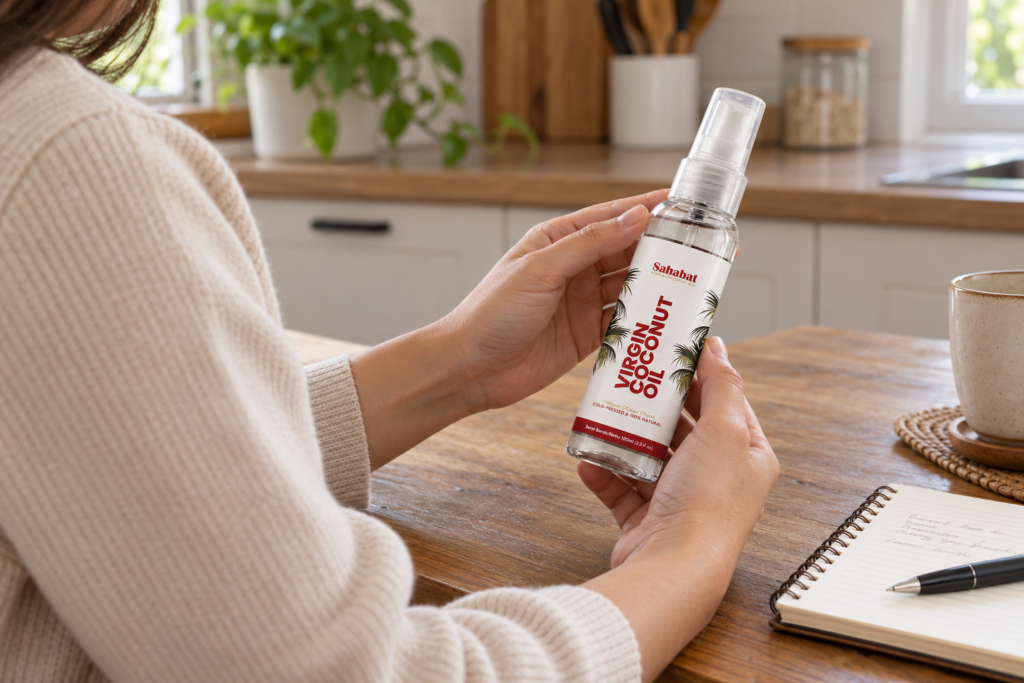
Use the label as a starting point, then request more information when needed.
- Product identity and ingredients. Confirm that you are buying VCO and that it is intended for your planned use.
- Processing description. Look for a clear explanation if cold pressing or another method matters to you.
- Package condition. Check that the seal and container are intact.
- Date and batch information. Keep these details available, particularly for business purchases.
- Storage guidance. Follow the manufacturer’s instructions after opening.
- Relevant documentation. For business sourcing, request available specifications and documentation supporting any certification claims.
When comparing suppliers, use the same questions for each. Clear answers are more useful than broad descriptions such as “premium” or “best quality.”
Frequently Asked Questions
What does VCO stand for?
VCO stands for virgin coconut oil.
Is VCO made from coconut water?
No. The oil comes from coconut meat. Some production methods first extract coconut milk from the meat and then separate the oil.
Does fresh-dry processing mean the same thing as conventional copra processing?
No. Fresh-dry VCO production starts with fresh kernel that is prepared and dried as part of a controlled production route. The word “dry” alone does not describe the complete process.
Is centrifuged VCO the same as cold-pressed VCO?
No. Centrifugation and pressing are different separation techniques. Use the process description supplied by the manufacturer.
Does the production method tell me everything about quality?
No. Raw-material handling, process control, moisture management, packaging, and storage also matter. Evaluate the finished product and its documentation.
Can I use VCO for cooking?
Food-grade VCO can have culinary applications. Choose a suitable recipe and follow the cooking guidance for the product you buy.
Explore Sahabat Virgin Coconut Oil
Looking for VCO for your kitchen, café, retail business, or product development?
Contact Sahabat for available packaging sizes, pricing, product specifications, and information about the stated production method. Share your intended application and estimated quantity so our team can help you review the available options.
Chat with Sahabat About VCO on WhatsApp →
Masak Lebih Sehat dengan Minyak Goreng Kelapa Sahabat
100% minyak kelapa murni untuk rumah tangga, usaha, dan industri. Belanja online atau hubungi tim kami.